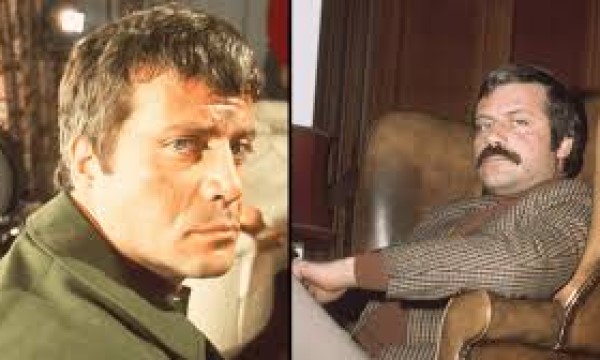
Oliver Reed remains one of the most fascinating figures in British cinematic history. Known for his rugged masculinity, intense performances, and a life as dramatic off-screen as on, Reed carved a place for himself in the annals of film history. This article delves deep into his career, personal life, and enduring legacy, providing a comprehensive view of the man behind the legend.
Early Life and Background
Born Robert Oliver Reed on 13 February 1938 in Wimbledon, London, England, Reed was the son of actors Peter Reed and Naomi Chance. Growing up in a household steeped in theatre, it was perhaps inevitable that he would gravitate towards the performing arts. From a young age, Reed displayed a remarkable presence and intensity, traits that would later define his film career.
Despite his privileged exposure to acting, Reed’s childhood was not without its challenges. He attended the prestigious Italia Conti Academy of Theatre Arts, but he often clashed with authority figures, reflecting a rebellious streak that would persist throughout his life.
Career Beginnings
Oliver Reed’s career began in the mid-1950s, with minor roles in British theatre and film. His commanding voice, sharp features, and natural intensity quickly set him apart from his contemporaries. Early work included appearances in stage productions and small film roles that showcased his potential.
By the 1960s, Reed began to take on more prominent parts, and his reputation as a compelling and unpredictable actor grew. His ability to embody both charm and menace made him a sought-after actor for a variety of roles, from historical dramas to modern thrillers.
Rise to Fame: Iconic Roles
Women in Love (1969)
One of Reed’s career-defining performances was in Ken Russell’s Women in Love. His portrayal of Gerald Crich, a complex and conflicted character, earned critical acclaim and demonstrated his capacity for psychological depth. Reed’s performance in this film solidified his status as a serious actor capable of handling challenging and provocative roles.
Oliver! (1968)
Reed also became widely recognised for his role as Bill Sikes in the musical adaptation of Oliver!. His dark, menacing portrayal of the villainous Sikes contrasted with the light-heartedness of the rest of the musical, providing a memorable performance that remains iconic to this day.
The Devils (1971)
Perhaps no film better exemplifies Reed’s fearlessness than Ken Russell’s controversial The Devils. In this historical drama, Reed’s portrayal of Father Urbain Grandier was both intense and unsettling. The film was banned in several countries for its explicit content, yet Reed’s performance was praised for its raw power and emotional complexity.
The Three Musketeers (1973)
In The Three Musketeers, Reed brought charisma and swagger to the role of Athos. This role showcased his versatility, as he moved seamlessly between drama, action, and adventure, proving he was not limited to brooding or villainous characters.
Gladiator (2000)
In one of his final and most widely recognised roles, Reed played Proximo in Ridley Scott’s Gladiator. Despite passing away during production, his performance remained impactful. His commanding presence and mentorship of Russell Crowe’s character resonated with audiences, earning him a posthumous BAFTA nomination for Best Supporting Actor.
Personal Life and Relationships
Oliver Reed’s personal life was as dramatic and legendary as his film roles. Known for his love of partying and often controversial behaviour, Reed’s off-screen life has become almost as famous as his on-screen achievements.
He was married twice and had two children. His first marriage to Kate Byrne produced a son, Mark Reed, while his second marriage to Josephine Burge lasted until his death. Reed also had a daughter, Sarah, from another relationship. Despite his tumultuous personal life, he was deeply devoted to his children.
Reed was notorious for his drinking and unpredictable behaviour, which became part of his public persona. Stories of pub brawls, high-spirited adventures, and eccentric behaviour abound, adding to the mythos of the man himself.
Oliver Reed’s Death
Oliver Reed passed away suddenly on 2 May 1999 in Valletta, Malta, at the age of 61. He suffered a heart attack while filming Gladiator, reportedly after a night of socialising and drinking. His death shocked fans and colleagues alike, as Reed had remained active in his career and was still performing at a high level.
His death necessitated the use of body doubles and CGI to complete his scenes in Gladiator, a technique that was relatively innovative at the time and showcased the dedication to preserving his final performance.
Legacy and Impact
Oliver Reed’s legacy is multifaceted. He is remembered as a fearless actor who brought authenticity and intensity to every role he played. His performances, particularly in Women in Love, The Devils, and Gladiator, continue to inspire actors and audiences alike.
Beyond his filmography, Reed represents a bygone era of British cinema, where larger-than-life personalities and raw talent defined the industry. His blend of charisma, menace, and vulnerability ensured that he was never easily forgotten.
Net Worth and Financial Life
At the time of his death, Oliver Reed’s estimated net worth ranged between $5 million and $8 million. While not among the wealthiest of his generation, Reed’s earnings reflected a successful career in film and television spanning over four decades. His financial legacy continues to support his family and preserves his memory through cinematic history.
Children and Family
Oliver Reed had two children:
- Mark Reed, his son, born from his marriage to Kate Byrne, who has largely remained out of the public eye.
- Sarah Reed, his daughter, from another relationship.
Despite his often tumultuous public life, Reed was known to be devoted to his children and ensured they were provided for, demonstrating a softer, more private side of his personality.
Last Appearance and Photograph
The final years of Reed’s life were marked by continued work in film, culminating in Gladiator. His last photographs show him as a robust and commanding figure, maintaining his signature intensity and charisma. These images serve as a testament to his enduring presence both on and off-screen.
Conclusion
Oliver Reed’s life was one of contrasts: a disciplined actor capable of delivering some of the most intense performances in British cinema, and a rebellious, larger-than-life personality who made headlines for his off-screen antics. His career, spanning over forty years, brought audiences unforgettable performances, while his personal life created stories that continue to fascinate.
From Women in Love to Gladiator, Reed’s talent was undeniable. His legacy endures through his films, inspiring new generations of actors and reminding the world of a time when cinema was defined by strong personalities and fearless performances.
Oliver Reed remains an icon, not only for his artistry but for the indelible mark he left on British culture and the film industry as a whole. His life story is a testament to talent, rebellion, and the enduring power of cinema.