Table of Contents
ToggleIntroduction
THV Patricia is one of the most respected and quietly influential vessels in modern British maritime history. Operated by Trinity House, the organisation responsible for maintaining aids to navigation around England, Wales and the Channel Islands, THV Patricia has spent decades ensuring the safety of mariners and the smooth flow of maritime trade. While she may not enjoy the public attention given to naval warships or luxury liners, her contribution to coastal safety, navigation and maritime resilience is immense.
Built as a multi-functional tender, THV Patricia was designed to handle demanding offshore conditions while performing a wide range of technical and operational duties. From buoy maintenance and wreck marking to hydrographic support and emergency response, she has played a vital role in keeping Britain’s waters safe and navigable.
This article explores the history, design, capabilities and long-term significance of THV Patricia, explaining why she remains such an important symbol of Britain’s maritime infrastructure.
The Role of Trinity House and the Importance of THV Patricia
Understanding Trinity House
Trinity House is the General Lighthouse Authority for England, Wales and the Channel Islands. Its mission is to ensure that mariners can navigate coastal and offshore waters safely, day and night, in all weather conditions. This responsibility includes the maintenance of lighthouses, buoys, beacons and other navigational aids that guide ships through some of the busiest sea routes in the world.
Why THV Patricia Matters
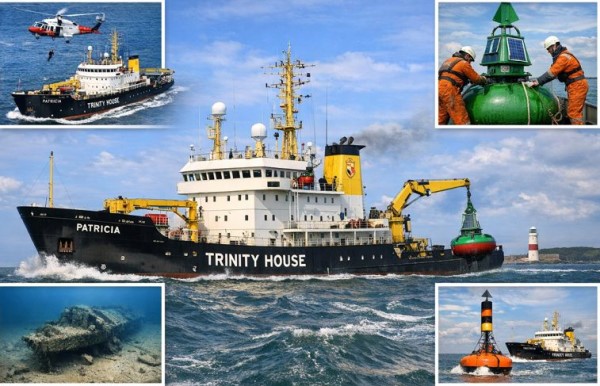
THV Patricia was built to support this mission at sea. As a tender vessel, her primary role is to service and maintain navigational aids that cannot be reached from land. This work is physically demanding, highly technical and often carried out in rough weather. The reliability and versatility of THV Patricia made her one of the most trusted workhorses in the Trinity House fleet.
Design and Construction of THV Patricia
A Vessel Built for Endurance
THV Patricia was constructed in the early 1980s, a period when durability and practical engineering were prioritised over luxury. Her hull was designed to cope with heavy seas, strong tides and prolonged offshore operations. Stability, strength and safety were central to her design philosophy.
Technical Specifications
While exact figures are less important than performance, THV Patricia is a large and powerful vessel for her class. She measures over 80 metres in length and displaces more than 2,500 tonnes. Her engines provide enough power to tow heavy buoys, assist damaged vessels and maintain steady positioning during precision tasks.
Deck Equipment and Machinery
One of THV Patricia’s defining features is her heavy-duty deck equipment.
Key elements include:
Heavy-Lift Crane
Used for lifting and positioning large navigation buoys, some of which weigh several tonnes.
Towing and Winch Systems
Essential for buoy handling, wreck marking and emergency assistance.
Spacious Working Deck
Designed to allow safe and efficient movement of crew and equipment during complex operations.
This combination of machinery allows THV Patricia to perform multiple roles without the need for additional support vessels.
Core Functions of THV Patricia
Maintenance of Navigation Aids
The primary task of THV Patricia has always been the maintenance of buoys and offshore navigation marks. These aids are critical to shipping safety, especially in narrow channels, busy ports and hazardous coastal areas.
Buoy Servicing Operations
Buoys must be regularly inspected, cleaned, repaired and repositioned. THV Patricia’s crew retrieves buoys from the seabed, carries out maintenance on deck and carefully reinstalls them to precise coordinates.
Light and Beacon Support
In addition to buoys, THV Patricia supports offshore light structures and beacons, ensuring they remain operational and correctly aligned.
Wreck Location and Marking
Shipwrecks and submerged hazards pose serious risks to navigation. THV Patricia has been used to locate, assess and mark wrecks so that mariners are warned of potential dangers.
Emergency Response Capability
When a new wreck occurs, rapid response is essential. THV Patricia can deploy temporary markers and buoys, helping to prevent further accidents until permanent solutions are put in place.
Hydrographic and Survey Support
Accurate seabed data is vital for safe navigation. THV Patricia has supported hydrographic surveys by providing a stable platform for survey equipment and personnel.
Supporting Marine Science
Beyond navigation, the vessel has occasionally assisted scientific and environmental research, demonstrating her adaptability beyond routine operations.
Life On Board THV Patricia
Crew and Accommodation
Life aboard THV Patricia is focused on professionalism, teamwork and safety. The vessel carries a skilled crew of mariners, engineers and technicians, all trained to work in challenging marine environments.
Accommodation is practical rather than luxurious, reflecting the vessel’s working nature. However, it is designed to support extended deployments, with comfortable living spaces and facilities for rest and recovery.
Training and Seamanship
Serving aboard THV Patricia has long been considered valuable experience within the maritime sector. Crew members gain hands-on exposure to complex operations, heavy machinery and real-world problem solving at sea.
THV Patricia and Public Engagement
Coastal Voyages and Awareness
At various times in her career, THV Patricia has taken part in special coastal voyages and public events. These occasions helped raise awareness of the vital work carried out by Trinity House and highlighted the importance of navigation safety.
A Symbol of Maritime Reliability
For many coastal communities and professional mariners, THV Patricia became a familiar and reassuring presence. Her arrival often signalled essential maintenance work or the resolution of a navigational hazard.
Challenges of an Ageing Vessel
The Realities of Long Service
With decades of service behind her, THV Patricia inevitably faced the challenges associated with an ageing vessel. Maintenance demands increased, and newer technologies began to surpass what was available when she was built.
Balancing Heritage and Modern Needs
Despite her age, THV Patricia continued to perform effectively thanks to careful maintenance and upgrades. However, the evolving demands of maritime safety eventually led to discussions about fleet renewal and replacement.
The Legacy of THV Patricia
Contribution to Maritime Safety
Few vessels can claim such a direct and lasting impact on everyday maritime safety. Thousands of ships have navigated safely thanks to the buoys, lights and markers maintained by THV Patricia and her crew.
Respect Within the Maritime Community
Among professionals, THV Patricia is remembered not just as a vessel, but as a dependable partner in some of the most demanding conditions at sea. Her reputation is built on consistency, strength and service.
An Enduring Example of British Engineering
THV Patricia represents a period of British shipbuilding where function and longevity were paramount. Her long operational life stands as proof of the quality of her design and construction.
Conclusion
THV Patricia may never be widely known outside maritime circles, but her importance cannot be overstated. As a Trinity House tender, she has spent decades protecting lives, cargo and coastlines by maintaining the invisible infrastructure that makes safe navigation possible.
From buoy servicing and wreck marking to survey support and emergency response, THV Patricia has exemplified reliability and versatility. Her story is one of quiet dedication, skilled seamanship and unwavering commitment to maritime safety.
In the history of British coastal operations, THV Patricia will always be remembered as an unsung guardian of the sea, a vessel whose work continues to benefit mariners long after her name fades from public view.