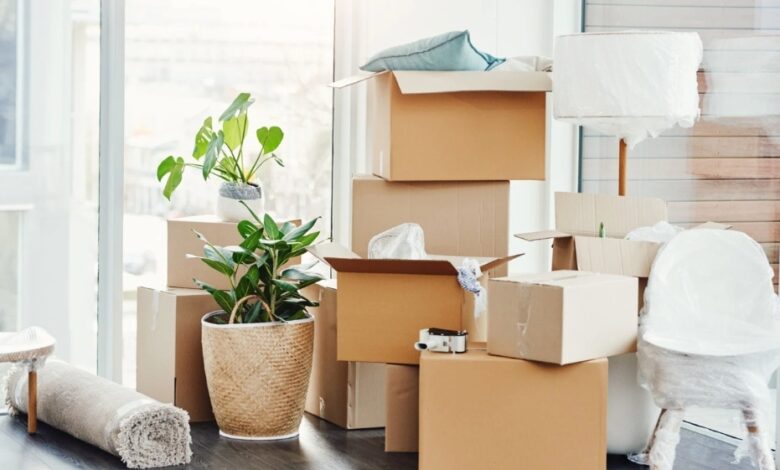
TL;DR: Packing a house under time pressure is more about following a system than moving faster. Packing one room at a time, labeling every box, preparing an “open first” box for each family member, and setting aside a “do not pack” area for last-minute essentials can help prevent the most common moving mistakes. According to the American Moving and Storage Association, improperly packed items accounted for a large share of moving damage claims.
Packing a house in less time than expected is usually a sequencing problem, not a speed problem. Moving and boxing random items as you move from room to room often leads to misplaced belongings, unlabeled boxes, and extra time spent unpacking. A consistent packing order makes both the move and the unpacking process more manageable.
When time is limited, some homeowners choose to pack only everyday items and leave fragile or difficult-to-pack belongings to professionals. Move Caddies, a Moving company Fort Collins clients trust, offers packing services for homeowners who need help before moving day or want assistance with items such as glassware, artwork, electronics, and other valuables. Professional packing does not have to include the entire home. Many people use it selectively for the items that require the most time, care, or specialized packing materials.
Start With the Items You Need Last
This seems backward, but it is the most important sequencing principle. Start by packing everything that you will not need for the final days in the current home. Off-season clothing, decorative items, extra linens, books, games, and anything stored in closets or utility areas that is not in regular use can be packed first without affecting daily life.
Packing these items first produces completed, labeled boxes that move out of the way and give you room to work. Packing daily-use items first produces half-finished rooms that are harder to live in during the remaining days before the move.
The Room-by-Room System That Actually Works
Packing room by room is faster than moving through the house picking off individual items. A completed room is a finished problem. An unfinished house with items from every room spread across multiple boxes is not.
Each room gets one or two medium boxes and one large box. Medium boxes carry heavy items (books, kitchen items, tools). Large boxes carry light items (linens, pillows, clothing). Mixing heavy items into large boxes produces boxes that cannot be safely carried by one person and that break mid-move.
Every box gets a label before it is taped shut. Label format: room name at the destination, brief contents description. Writing the label before closing the box is easier and produces more accurate labels than labeling after the box is sealed and you have forgotten what you packed.
The One Open-First Box Rule
Every person who lives in the house gets one box that travels in the car, not the moving truck. This box contains everything needed for the first 24 hours at the new address.
For adults: phone charger, one change of clothes, toiletries, medications, basic documents (ID, passport), and anything else that would be a genuine problem to locate in a stack of boxes on the first night.
For children: their most-used toy or comfort item, one outfit, and any items specific to their bedtime routine.
Pet supplies travel in the car, not the truck: food, bowls, medications, and leash or carrier.
The open-first box prevents the first-night scavenger hunt through stacked boxes that ends with no one finding the toilet paper until midnight.
How to Pack Breakables Without Waste
Professional packers use paper, not bubble wrap, as the primary wrapping material for most breakables. Paper is cheaper, compresses around irregular shapes better, and produces a tighter pack in the box.
Plates pack vertically, not flat. Vertical stacking distributes weight across the rims rather than concentrating it on a flat surface where one layer’s weight bears directly on the layer below. A box of vertically packed plates is more impact-resistant than a flat-stacked box.
Glasses wrap individually in paper, then pack upside down on a layer of crumpled paper in the bottom of the box. The upside-down orientation puts the strongest part of the glass (the base) facing up under the weight of items stacked on top.
Fill every empty space in a breakables box. An unfilled box allows items to shift during transport. A tightly packed box with crumpled paper filling every cavity does not shift.
Safety Tip: Don’t Overpack the Box
Even a well-packed box can become a problem if it is too heavy to lift safely. Pack books, tools, and other dense items in smaller boxes, and reserve larger boxes for lighter belongings such as linens, pillows, or clothing. The National Institute for Occupational Safety and Health (NIOSH) uses a 51-pound recommended weight limit under ideal lifting conditions, although the safe lifting weight is often lower depending on the size of the box, lifting position, and carrying distance. When a box feels too heavy or awkward, divide the contents into two boxes or ask for help moving it.
What to Label Every Box
Two pieces of information belong on every box label: the room at the destination and the contents category. “Bedroom 2, winter clothes” is a useful label. “Misc” is not.
Add “FRAGILE” in large letters on any side of the box that carries breakables, plus an arrow indicating which side faces up. Moving crews follow these labels when they are visible. A fragile label on only the top of a box that gets placed with the top facing a wall is not visible when it matters.
What Goes in the Moving Truck Last
Items that need to be accessed first at the destination load into the truck last. The open-first boxes, a broom and cleaning supplies, the coffee maker, and any items your children will want immediately upon arrival all load last and sit nearest the truck door.
Tell the moving crew which items load last before they begin. A moving crew that knows this from the start loads accordingly. A crew told this after loading is halfway done will not reorganize the truck.
Key Takeaways
- Packing items you will not need for the final days first is the sequencing principle that produces completed, labeled boxes and room to work; packing daily-use items first produces an unlivable, half-finished house
- Every person gets one open-first box that travels in the car containing 24-hour essentials; this single step prevents the first-night scavenger hunt through stacked boxes
- Medium boxes carry heavy items and large boxes carry light items; reversing this produces boxes too heavy to carry safely and increases the probability of box failure during the move
- Label format of destination room plus contents category produces boxes that can be sorted and unpacked at the destination without opening each one to identify the contents
- Items needed first at the destination load last into the truck; telling the moving crew this before they begin loading is the only reliable way to ensure those items are accessible on arrival
Packing under time pressure rewards a system over speed. The room-by-room sequence with specific labeling produces a packed house in less elapsed time than the scattered approach, because completed rooms stay finished and do not require revisiting.