Christine Wallace: The Master Biographer Who Unveils Australia’s Political and Cultural Titans
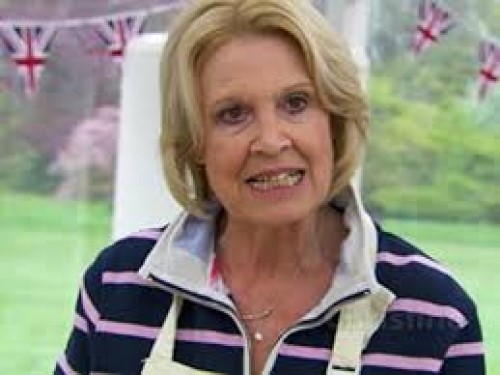
Christine Wallace is a name synonymous with meticulous research, compelling storytelling, and the art of political biography in Australia. With a career spanning decades in journalism, literature, and academia, Wallace has carved a niche for herself as a biographer who not only records history but brings it alive for readers. From covering major political shifts to chronicling the lives of iconic Australians, her work has become a reference point for scholars, politicians, and curious readers alike.
Early Life and Education
Christine Wallace was born in 1960 in Australia, where she spent her formative years cultivating an interest in politics, history, and literature. Her academic journey is as impressive as her professional one. Wallace pursued her studies at the Australian National University, focusing on political science and history, fields that would later become the foundation of her illustrious career.
Furthering her education, she obtained a Bachelor of Economics from the University of Sydney and later an MBA from the Australian Graduate School of Management. Her academic rigor culminated in a PhD from the Australian National University in 2015, a work that explored the intersection of political biography and public perception. Wallace’s educational background has uniquely equipped her to blend analytical precision with narrative storytelling—a combination that defines her biographies.
Journalism Career: The Foundation of an Author
Before she became a celebrated biographer, Christine Wallace spent over a decade as a political and economic journalist. She was a prominent member of the Canberra Press Gallery, Australia’s hub for political reporting, where she developed a reputation for insight, accuracy, and fearless reporting.
Wallace worked with some of Australia’s leading media outlets, including The Australian, The Australian Financial Review, Business Review Weekly, and ABC Television. Her journalism career provided her with an unparalleled understanding of political dynamics, personalities, and the subtle interplay of power and policy.
The skills she honed during this period—interviewing key political figures, analysing complex policies, and conveying narratives compellingly—laid the groundwork for her later success as a biographer.
Transition to Biographical Writing
After the 1996 Australian federal election, Wallace chose to leave journalism and focus entirely on writing books. This transition marked a significant turning point in her career. Freed from the constraints of daily news cycles, she was able to delve deeper into the lives and motivations of the individuals who shape Australia’s cultural and political landscape.
Her first major work, “Hewson: A Portrait” (1993), examined the life of John Hewson, former leader of the Liberal Party of Australia. The book not only chronicled Hewson’s political journey but also provided insight into the inner workings of Australian politics during a transformative era.
Notable Biographies and Publications
Christine Wallace has authored several critically acclaimed biographies that highlight her versatility and depth as a writer. Some of her most significant works include:
Hewson: A Portrait (1993)
This biography of John Hewson explored the challenges and triumphs of a political leader navigating the complexities of Australian politics. Wallace’s ability to blend personal anecdotes with political analysis made the book both informative and engaging.
Germaine Greer: Untamed Shrew (1997)
In this biography of the renowned feminist scholar Germaine Greer, Wallace tackled themes of gender, culture, and societal change. The book provided readers with a nuanced understanding of Greer’s influence on feminist thought, as well as the personal convictions that shaped her public persona.
The Private Don (2004)
Perhaps one of her most celebrated works, The Private Don explored the life of cricket legend Don Bradman. Wallace’s biography went beyond statistics and sporting achievements, offering a deeply human portrait of a national icon whose impact transcended sport.
Political Lives: Australian Prime Ministers and Their Biographers (2023)
In 2023, Wallace published a landmark study examining the role of biographers in shaping public perception of Australian prime ministers. This work was shortlisted for the Australian History Prize at the New South Wales Premier’s History Awards, cementing Wallace’s reputation as an authority on political biography.
The Craft of Political Biography
What sets Christine Wallace apart from other biographers is her ability to combine rigorous research with compelling storytelling. She meticulously studies archival material, interviews primary sources, and contextualises her subjects within broader social and political frameworks.
Her writing style is both accessible and authoritative, ensuring that her books appeal to scholars and casual readers alike. Wallace has often emphasised that a good biography should do more than recount events; it should illuminate the forces—personal, political, and cultural—that shape an individual’s life and decisions.
Academic Contributions
In addition to her writing, Wallace has made significant contributions to academia. She has served as a research fellow at the National Centre of Biography at the Australian National University, where she examines the role of biography in public understanding of politics and history. Her academic work underscores the importance of biography as a lens through which society can evaluate leadership, character, and legacy.
Wallace’s research has influenced both scholars and students, highlighting how carefully crafted biographies can inform political discourse and public debate. Her work bridges the gap between journalism, literature, and academia, demonstrating that political biography is both an art and a science.
Personal Life
Christine Wallace is married to Michael Costello, a senior figure in the Australian government. Despite her public prominence, Wallace maintains a private personal life, focusing her public attention on her professional achievements and literary contributions.
Her personal experiences, combined with her professional insight, contribute to the depth and authenticity of her work. Wallace’s ability to empathise with her subjects while maintaining critical objectivity is a hallmark of her biographical style.
Awards and Recognition
Over the years, Christine Wallace has received widespread recognition for her contributions to literature and political analysis. Her books have been praised for their depth, readability, and balanced portrayal of complex figures. Being shortlisted for the Australian History Prize is a testament to her enduring influence and the high regard in which she is held within literary and academic circles.
Impact on Australian Literature and Politics
Christine Wallace has played a crucial role in shaping the field of political biography in Australia. Her meticulous research, nuanced analysis, and engaging narrative style have set a high standard for biographical writing.
Through her work, readers gain more than just a chronological account of political events; they gain insight into the psychology of leadership, the pressures of public life, and the interplay between individual agency and historical forces. Wallace’s biographies are not merely books—they are essential tools for understanding modern Australia.
Why Christine Wallace Matters
In a world where political narratives are often oversimplified or sensationalised, Christine Wallace’s work stands out for its integrity and depth. She reminds us that the lives of public figures are complex, that decisions are shaped by personal history as well as public expectation, and that understanding these factors is essential for informed citizenship.
Her books are widely used in universities, political studies, and even media analysis, making her influence both academic and cultural. Wallace’s dedication to thorough research and compelling storytelling ensures that her work will remain relevant for generations to come.
Conclusion
Christine Wallace exemplifies the power of biography to illuminate the human side of politics and culture. Through her journalism, academic research, and literary accomplishments, she has shaped public understanding of Australia’s most influential figures. Her work transcends mere documentation, offering readers a lens through which to examine leadership, history, and the forces that shape society.
At 66 years of age, Wallace continues to contribute to literature and academia, leaving a legacy that will inform and inspire for decades. She is not only a chronicler of history but a master storyteller, bridging the worlds of journalism, politics, and literature with grace, insight, and integrity.