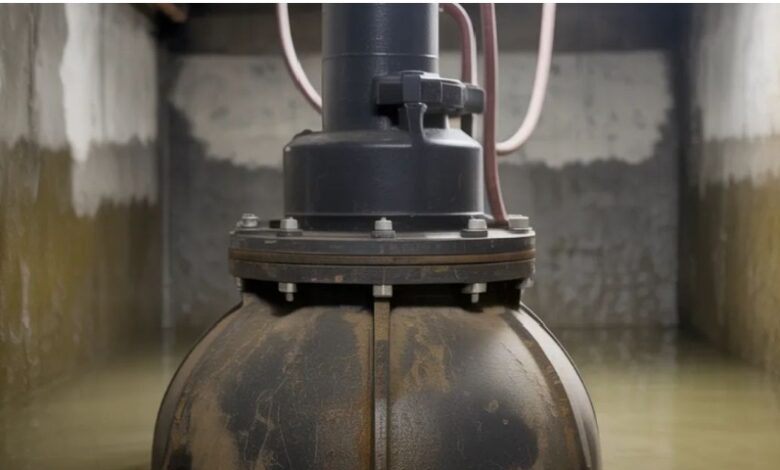
A submersible sewage pump is an important mechanism in the current wastewater management systems, as it is developed to efficiently serve solid waste and liquids. These pumps are used to transfer sewage between the places without clogging or contamination whether for residential, commercial or industrial purposes.
A submersible sewage pump works when fully submerged in liquid and is therefore very efficient, as it creates no noise and odour problems. As demand increases for effective drainage solutions, investing in the correct pump guarantees long-term performance, low maintenance expenses and reliability of the system.
What is a Submersible Sewage Pump?
A submersible sewage pump is a closed-type pump used to move sewage and wastewater in an underwater environment. It operates directly in the fluid without priming, unlike the traditional pumps. These types of pumps are widely applied in sewage systems, drainage and flood control systems.
They are constructed using sturdy materials to withstand extreme environments and can deal with solid waste without being blocked.
Applied in factories and processing plants to treat waste fluids and sludge.
Municipal Systems
Critical in sewage treatment facilities and community drainage systems for effective waste management.
Types of Submersible Sewage Pumps
Sewage pumps, which are submersible, can be of various types to suit a particular requirement.
Vortex Pumps
Used to work with liquids that have a high solid content without clogging.
Grinder Pumps
Provided with cutting mechanisms to chop up solids prior to pumping.
Effluent Pumps
Applied to pumping treated wastewater that contains minimal solids.
The appropriate type will be selected based on the waste type and the system’s needs.
Benefits of Using a Submersible Sewage Pump
A submersible sewage pump offers a variety of benefits over traditional pumping systems.
- Enhanced efficiency because it is in direct contact with the fluid.
- Less risk of cavitation.
- Space-saving installation
- Minimal maintenance requirements
- Improved performance in unfavourable environments.
These advantages make them a favourite with contemporary wastewater systems.
Materials and Build Quality
The durability and performance of a submersible sewage pump require high-quality materials.
- Cast iron to make it strong and long-lasting.
- Corrosion-resistant stainless steel.
- Lightweight design thermoplastic components.The selection of a material would be based on the intended use and the type of wastewater to be treated.
Installation Considerations
To perform optimally, it is important to install a submersible sewage pump properly.
- Proper pump size and capacity.
- Install in an appropriately designed sump or chamber.
- Install proper pipework and fittings.
- Make sure that electrical connections are safe.
Professional installation helps prevent problems with the pump’s operation and long-term performance.
Maintenance and Servicing
A submersible sewage pump is efficient in the long run with regular maintenance.
- Check blockages and debris.
- Check seals and motor condition.
- Clean components periodically
- Test auto controls and switches.
Regular maintenance minimises down time and avoids expensive maintenance.
Choosing the Right Submersible Sewage Pump
When choosing the right submersible sewage pump, several factors must be considered.
- Flow rate and head requirements.
- Waste type under control.
- Pump size and capacity.
- Energy efficiency
- Brand reliability and after-sales services.
An appropriate pump selection guarantees high efficiency and durability.
Spare Parts and Availability
The spare parts of a submersible sewage pump must be made available.
Reliable suppliers offer:
- Replacement impellers
- Mechanical seals
- Motors and electricity.
- Control panels and accessories.
The availability of spares will guarantee a fast repair and minimal inconvenience.
Why Invest in a High-Quality Submersible Sewage Pump?
A high-quality submersible sewage pump will provide superior performance, longevity, and efficiency. Quality pumps are manufactured to withstand tough environments without compromising performance.
They also minimise operation expenses as they minimise energy usage and maintenance needs. In both small- and large-scale systems, an efficient way to manage wastewater is to use a dependable pump.
Conclusion
Submersible sewage pump is a crucial component in effective and healthy wastewater management. These pumps are trusted to offer good solutions to sewage and waste fluids in residential and large industrial stations.