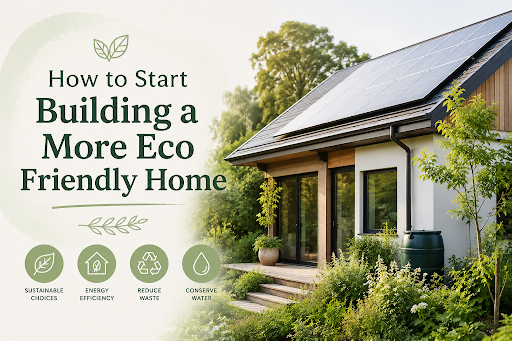
Creating a sustainable home no longer means making dramatic lifestyle changes or investing in expensive technology from the start. For many households across the UK, eco-friendly living begins with simple choices that gradually shape a healthier, more responsible home environment. Whether your goal is reducing waste, lowering energy use, or making more thoughtful purchasing decisions, every small improvement contributes to a larger positive impact.
Learning How to Start Building a More Eco Friendly Home is not about perfection. It is about progress. A home becomes more sustainable through practical habits, smarter materials, and conscious everyday decisions that support both your household and the environment.
Understand What an Eco Friendly Home Really Means
An eco-friendly home is designed or managed in ways that reduce harm to the environment while creating a healthier space for the people living in it. This usually involves cutting waste, lowering energy consumption, using sustainable materials, and choosing products with a reduced environmental footprint.
Many people assume sustainability requires expensive renovations or advanced systems. In reality, the foundation of a greener home often begins with simple behaviour changes. The way you heat your home, shop for essentials, manage waste, and use resources all contribute to your environmental impact.
Before making changes, it helps to assess your current habits. Consider areas such as:
- Energy usage
- Water consumption
- Household waste
- Cleaning products
- Food storage and packaging
- Bathroom and kitchen essentials
Identifying where waste or inefficiency exists allows you to prioritise manageable improvements.
Start with Energy Efficiency
Energy efficiency is often the most practical first step towards sustainability. Reducing unnecessary energy consumption lowers household bills while decreasing carbon emissions.
Begin by focusing on lighting. Replace outdated bulbs with LED alternatives, which use significantly less electricity and typically last longer. Heating is another important area. In the UK, home heating accounts for a large share of household energy use. Improving insulation can make a noticeable difference.
Draught proofing windows, insulating loft spaces, and sealing gaps around doors can all reduce heat loss. Smart habits also matter. Turn appliances off at the socket when not in use, avoid leaving electronics on standby, and wash clothes at lower temperatures where possible.These adjustments may seem minor, but collectively they make your home more efficient and support your goal of How to Start Building a More Eco Friendly Home.
Reduce Household Waste Gradually
Waste reduction is one of the easiest and most visible ways to live more sustainably. Most homes generate more waste than necessary simply through convenience habits.
A practical approach is to examine the products you buy regularly. Packaging heavy items, disposable products, and short use goods often contribute significantly to household rubbish.
To reduce waste:
- Reuse containers where possible
- Choose refillable products
- Avoid unnecessary packaging
- Compost food scraps if practical
- Recycle according to local council guidance
Waste reduction is less about eliminating all rubbish immediately and more about becoming intentional with what enters your home.
Make More Thoughtful Product Choices
An eco-friendly home is shaped by what you bring into it. Purchasing decisions have environmental consequences far beyond the point of sale.
Instead of focusing solely on price or convenience, consider the material, lifespan, and production impact of household items. Products made from renewable resources or durable materials often create less waste over time.
This applies especially to everyday essentials. Many households are now replacing conventional products with lower impact alternatives. For example, switching to bamboo toilet rolls can help reduce reliance on traditional paper sources while maintaining practicality.
Similarly, kitchen habits can be improved through reusable or renewable alternatives. Some households choose bamboo toilet paper as part of a broader effort to reduce dependency on conventional disposable paper products.
The goal is not to replace everything at once. Sustainable purchasing works best when done gradually as products naturally need replacing.
Focus on Water Conservation
Water is often overlooked in conversations about sustainability, yet it plays an essential role in household environmental impact.
Simple changes can significantly reduce unnecessary water use. For example:
- Fix leaking taps promptly
- Install water efficient showerheads
- Turn taps off while brushing teeth
- Run washing machines only with full loads
- Collect rainwater for outdoor plants if possible
Reducing hot water usage also lowers energy consumption, creating a double benefit.
Building an eco friendly home involves understanding how daily routines influence resource use. Water saving habits are often easy to adopt and require minimal investment.
Improve Kitchen Sustainability
The kitchen is often one of the busiest and most waste producing areas in any home. Food waste, packaging, cleaning products, and disposable materials all contribute to environmental impact.
Start by improving food management. Plan meals in advance, store leftovers properly, and freeze food before it spoils.
Reusable alternatives can also reduce waste significantly. Glass jars, reusable containers, cloth bags, and refillable bottles all help minimise disposable reliance.
Cleaning habits matter too. Choosing concentrated or refillable products reduces packaging waste and transportation impact.
Kitchen sustainability is not about removing convenience entirely. It is about introducing better systems that create less waste over time.
Create a More Sustainable Bathroom Routine
Bathrooms often contain many short use or disposable products, making them a practical place to introduce eco friendly habits.
Look at what you regularly consume. Toiletries, hygiene products, paper goods, and plastic packaging are common sources of waste.
A more mindful routine may involve:
- Refillable soap dispensers
- Bar soaps or shampoo bars
- Reusable cloths or pads where appropriate
- Packaging conscious toiletries
Household paper products are another area where small changes can support sustainability. Some consumers choose bamboo tissue as part of a shift towards renewable materials in daily life.
As with all eco-friendly habits, consistency matters more than speed.
Choose Quality Over Quantity
One common barrier to sustainable living is the habit of purchasing low cost items that require frequent replacement.
Eco friendly homes benefit from long lasting products. Buying fewer, higher quality items reduces waste, lowers replacement frequency, and often saves money over time.
This principle applies to furniture, storage products, textiles, cookware, and household tools.
Before buying something new, ask:
- Do I actually need this?
- Will it last?
- Can I buy a better version less often?
This mindset shift is central to How to Start Building a More Eco Friendly Home because it addresses consumption patterns at their source.
Bring Natural Materials into the Home
Material choices shape both sustainability and comfort. Natural and renewable materials generally have lower environmental impact than synthetic or heavily processed alternatives.
Where practical, consider incorporating materials such as:
- Wood from responsible sources
- Bamboo
- Organic cotton
- Linen
- Cork
- Wool
- Recycled glass or metal
These materials are often durable, breathable, and timeless, making them practical for long term home use.
You do not need a full redesign. Small changes such as natural bedding, wooden accessories, or reusable cloth alternatives can gradually shift your home environment.
Build Sustainable Habits That Last
Long term sustainability is built on repeatable habits, not temporary motivation.
Rather than trying to transform your entire lifestyle in one month, focus on one or two changes at a time. Once these become normal, add another improvement.
For example:
Week one may focus on recycling properly.
Month two might involve reducing food waste.
Later, you may begin switching household essentials or improving insulation.
This slower approach is realistic and sustainable in itself.
Learning How to Start Building a More Eco Friendly Home is ultimately about consistency. Small decisions repeated daily often create more meaningful results than ambitious short lived efforts.
Educate Everyone in the Household
Sustainability works best when it becomes part of household culture. If multiple people share your home, involve them in simple habits and decisions.
Discuss:
- Energy saving routines
- Waste sorting
- Shopping choices
- Water conservation
- Reusable product use
Making sustainability a shared responsibility reduces friction and helps habits stick naturally. Children can also learn valuable awareness through small tasks such as turning lights off, sorting recycling, or helping manage food waste.
Final Thoughts
Building a greener home does not require perfection, expensive upgrades, or drastic sacrifices. It begins with awareness and practical improvements that fit naturally into everyday life.
Understanding How to Start Building a More Eco Friendly Home allows you to approach sustainability with confidence rather than pressure. By improving efficiency, reducing waste, making better purchasing decisions, and adopting mindful habits, you gradually create a home that is both comfortable and more environmentally responsible.
The most effective eco-friendly homes are not built overnight. They are shaped by thoughtful choices repeated over time. Every adjustment, however small, contributes to a healthier home and a more sustainable future