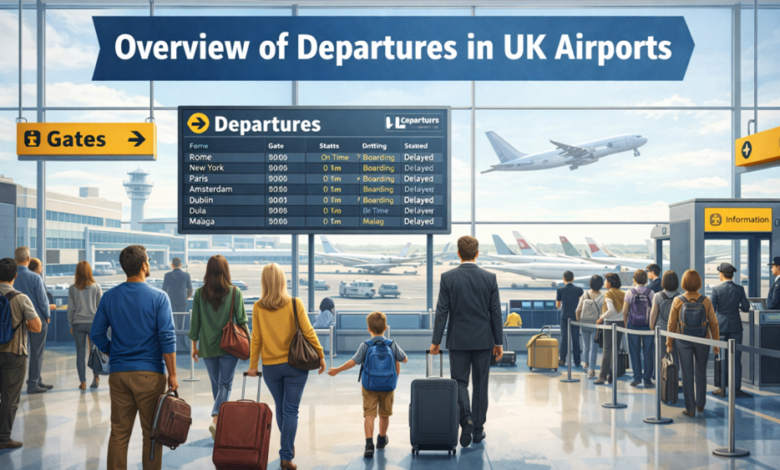
Departures at UK airports mark the beginning of a passenger’s journey, covering every step from entering the terminal to boarding the aircraft. The process is carefully structured to ensure safety, efficiency, and a smooth travel experience. While procedures may vary slightly between airports and airlines, the overall system remains consistent across the UK.
Understanding the Departures Process
The departures journey typically follows a clear sequence: arrival at the airport, check-in, baggage drop (if required), security screening, and boarding. Each stage is essential, and passengers must complete them within the required timeframes to avoid missing their flight.
Arrival and Check-In
Passengers are advised to arrive at the airport well in advance of their flight. Generally, arriving 2–3 hours before departure is recommended, especially for international travel.
Check-in options include:
- Online check-in before arriving at the airport
- Self-service kiosks within the terminal
- Traditional check-in counters staffed by airline personnel
Those traveling with only hand luggage and who have already checked in online can often proceed directly to security, saving time.
Baggage Drop and Preparation
Passengers with checked luggage must use baggage drop counters or self-service bag drop machines. Many UK airports have adopted automated systems to speed up this process.
To avoid delays, travelers should ensure their luggage meets airline size and weight requirements and that prohibited items are not included.
Security Screening
Security screening is a critical part of the departures process. All passengers must pass through security before entering the departure lounge.
During screening:
- Boarding passes are checked
- Carry-on bags are scanned
- Liquids and electronic devices may need to be presented separately
Many UK airports are introducing advanced scanning technology to make security faster and more convenient, reducing the need to remove items from bags.
Departure Lounge and Facilities
Once through security, passengers enter the departures lounge. This area is designed for comfort and convenience while waiting for boarding.
Typical facilities include:
- Duty-free shopping
- Restaurants and cafés
- Airline lounges
- Flight information display screens
Major hubs such as Manchester Airport Departures highlight how well-organized lounges can enhance the overall travel experience with a wide selection of services and clear passenger guidance.
Boarding Process
Boarding usually begins 30–60 minutes before departure. Passengers must proceed to the assigned gate, where airline staff verify documents before allowing boarding.
Airlines often board passengers in groups or by seat rows to ensure an organized process.
Technological Advancements
UK airports are increasingly adopting new technologies to improve departures. These include:
- Digital boarding passes and mobile check-in
- Automated baggage systems
- Biometric and facial recognition systems
These innovations aim to reduce waiting times and create a more seamless travel experience.
Passenger Responsibility and Planning
Passengers play an important role in ensuring a smooth departure. Proper planning can help avoid stress and delays.
Key tips include:
- Arriving on time
- Keeping travel documents ready
- Following baggage and security rules
- Monitoring flight updates
Failure to meet requirements or timelines can result in missed flights or additional costs.
Source: flightracker.co.uk
Departures in UK airports are designed to be efficient, secure, and increasingly technology-driven. By understanding each step of the process and preparing in advance, travelers can navigate departures with confidence and ease, ensuring a smooth start to their journey.