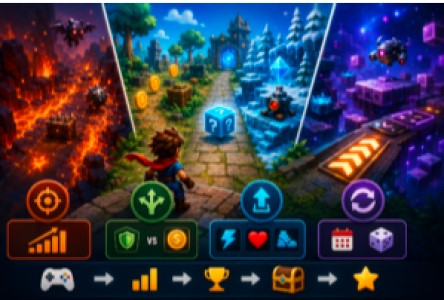
Many makers create games with AI tools only to notice that after a few minutes, everything starts to feel the same. The core action works well at first, but soon players perform the same moves against similar obstacles with little change. The excitement fades, and the game loses its hold.
This happens because basic versions often repeat the same short loop without enough differences to keep sessions fresh. AI generated games make the problem worse when new levels look different but play almost identically. Players quickly lose interest because there’s no sense of discovery or growth.
The good news is you can fix repetition with practical changes that add variety without making the game complicated.
Why Repetition Appears So Quickly
Repetition sets in when the core mechanic has no layers to explore. Players master the basic action in the first few tries and then face the same situations again and again. Scores may increase, but the experience stays flat.
In AI generated games, the issue grows because the system often creates new areas using the same patterns and rules. The visuals might change, but the timing, number of threats, and player choices remain almost identical. Without meaningful differences, each new level feels like a copy of the last one.
Players want each session to offer something slightly new, whether it’s a different challenge, a new way to play, or a fresh surprise. Fixing repetition turns a short lived game into one that holds attention for weeks or months.
Signs Your Game Becomes Repetitive Too Soon
Look for clear signs that repetition is hurting your game. Players reach their best scores quickly and then lose motivation to continue. They say the game was fun at the start but became boring after ten or fifteen minutes.
Newly generated levels feel familiar rather than exciting, and there are few memorable moments worth sharing. Another sign appears when testers complete several runs and can’t remember what made one different from another. If friends play once and never return, or sessions always follow the same rhythm, variety is clearly missing.
4 Main Causes of Fast Repetition
- Fixed Patterns. The same types and timing of obstacles appear in almost every section, with only small visual differences.
- Limited Player Options. There’s only one way to approach each situation, leaving no room for different strategies or play styles.
- No Progression Layers. New abilities, power ups, or rule changes are missing, so the core action never evolves.
- Random Instead of Meaningful Variety. Generated content changes appearance but not the actual challenge or flow.
Adding Variety to Core Actions
Start by introducing small changes to the main mechanic that keep it feeling fresh. Alter the speed or direction of movement at different moments. Add occasional special items that temporarily change how the player interacts with the world.
Create several versions of the same action with different outcomes. For example, one type of collectible could give points while another temporarily slows enemies or opens a new path. These small twists make each attempt feel different, even when the basic controls stay the same.
In AI generated games, set rules that mix these variations naturally across new areas. The system can then create levels that combine familiar actions with fresh elements, reducing the sense of sameness.
Creating Different Challenge Types
Keep players engaged by offering varied types of challenges within the same game. One section might focus on quick reactions with many fast moving threats, while another emphasizes careful timing and planning. Alternate between high pressure moments and calmer collection phases.
Introduce light random events that appear at set intervals, such as bonus rounds, sudden speed changes, or special objectives. These events break the routine without breaking the rules of the game.
For generated content, combine a few base templates with different modifiers so each new area offers a fresh mix of challenges. Players will look forward to seeing what combination appears next, which greatly reduces repetition.
4 Effective Ways to Reduce Repetition
- Gradual Introduction of New Elements. Reveal new obstacle types, power ups, or rules slowly across sessions, so players always have something new to discover.
- Multiple Play Styles. Allow different approaches to the same goal, such as a fast, risky path or a slower, safer route, giving players a choice in how they play.
- Session Based Changes. Add daily or run based modifiers that slightly alter speeds, item frequencies, or available actions so no two sessions feel exactly alike.
- Evolving Difficulty Layers. Increase not just the number of threats but also their combinations and behaviors as players advance.
Building Progression That Feels Fresh
Progression stops repetition by giving players clear reasons to continue. Unlock small new abilities or visual changes after reaching certain milestones. These could include faster movement, temporary shields, or new character appearances that make actions feel different.
Add a light story or theme progression even in simple games. As scores increase, show new backgrounds, music variations, or celebratory effects that mark advancement. This creates a sense of journey rather than endless repetition of the same loop.
In AI generated games, tie some progression elements to overall performance across multiple runs rather than single sessions. This encourages players to return and try again with improved tools or knowledge.
4 Areas to Test for Reduced Repetition
- Early Sessions. Check whether the first few plays feel engaging and leave players wanting more.
- Mid to Late Play. Confirm that variety continues and the game doesn’t settle into a predictable rhythm after ten or fifteen minutes.
- Different Player Approaches. Watch both careful and aggressive play styles to ensure each feels rewarding and different.
- Long Term Interest. Ask testers to play multiple times over several days and note whether they still find new enjoyment.
See It Done Right
A helpful example of a game that maintains interest through good variety appears in Navy Ships 3D, where players face changing sea conditions, different ship behaviors, and evolving challenges that keep each encounter fresh. Notice how the core action stays clear while small changes in environment and threats prevent the experience from becoming repetitive, and use the same careful mixing of familiar and new elements when reducing repetition in your own AI generated game.
Keeping Variety Balanced and Simple
Added variety works best when it supports the core mechanic rather than replacing it. Introduce changes gradually so new players aren’t overwhelmed while experienced players stay challenged. Test every new element to ensure it actually increases enjoyment rather than creating confusion.
Avoid adding too many variations at once. A few well chosen differences spread across the game create better results than dozens of minor ones. Focus on changes that feel meaningful and fun to discover.
Final Thoughts
Your AI game feels repetitive too quickly mainly because of fixed patterns, limited player options, missing progression layers, and random rather than meaningful variety. By adding small twists to core actions, creating different challenge types, introducing gradual new elements, and building clear progression, you can keep sessions fresh and exciting for much longer.
Whether you build your games with Astrocade or other easy tools, these steps help you create experiences that players return to again and again. Start by identifying the most repetitive parts of your current build, apply one or two variety fixes, and test with real players after each change.