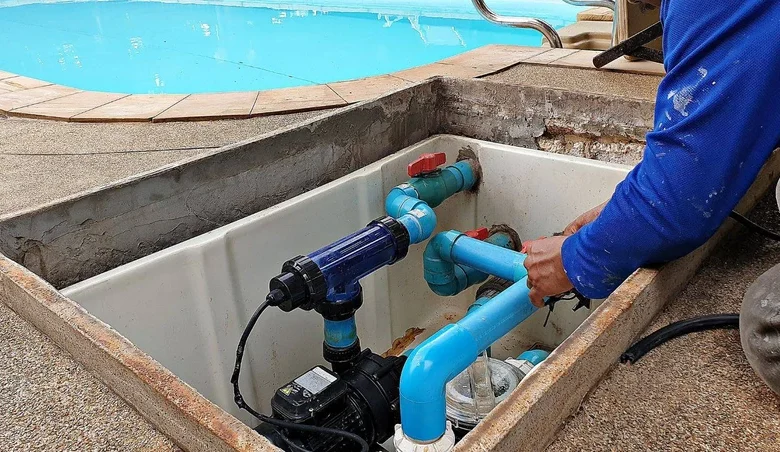
Your pool chlorinator cell should last 7 to 10 years with proper maintenance. Many Perth installations fail within 3 to 5 years, forcing expensive premature replacement.
Most owners blame manufacturing quality or water chemistry. The real culprit? Poor swimming pool pumps operation and maintenance.
Inadequate water circulation creates stress on chlorinator cells that accelerates failure and shortens lifespan dramatically.
The Flow Rate Stress
Chlorinator cells operate under specific flow rate conditions. Too little flow and the cell works overtime trying to produce adequate chlorine without proper water movement. Too much flow creates turbulence that damages cell plates over time.
Most Perth pools use single-speed pumps running constant capacity regardless of actual circulation requirements. This inflexible operation forces chlorinators into suboptimal flow conditions constantly.
Cells working outside design parameters degrade faster. What should be 10-year equipment becomes 4-year equipment simply because pump operation creates chronic stress.
The Cavitation Destruction
Cavitation occurs when air enters pump suction lines. Water boils inside pumps, creating bubbles that collapse and damage impellers. This same cavitation travels through your entire plumbing system directly into your chlorinator.
Cavitation inside chlorinator cells destroys electrode surfaces, accelerates corrosion, and forces premature cell failure. Most Perth homeowners ignore cavitation symptoms (rattling pump sounds) until catastrophic cell damage has already occurred.
Addressing pump cavitation immediately protects downstream equipment including chlorinators.
The Pressure Fluctuation Problem
Poorly maintained pumps create pressure fluctuations throughout your plumbing system. These pressure spikes and drops stress chlorinator internals, weakening seals and accelerating component wear.
Stable, consistent pressure maintains chlorinator integrity. Fluctuating pressure from worn pump bearings or improper suction creates chronic stress.
The Undersizing Consequence
Undersized pumps can’t move adequate water volume through chlorinators. The cell works harder compensating for poor circulation, accelerating internal wear.
Think of it like running an engine constantly at high RPM instead of operating at design specifications. The component works harder, runs hotter, and fails faster.
A Baldivis chlorinator lasted only 4 years despite normal maintenance. Replacement inspection revealed internal damage from chronic overstress. Analysis showed the pump was undersized for the pool volume. The chlorinator wasn’t defective—it was being abused by inadequate circulation.
The Maintenance Cascade
Clogged pump filters reduce flow through chlorinators. Dirty pump baskets restrict suction. Worn pump bearings create vibration affecting chlorinator mounting. Each maintenance oversight adds stress to your chlorinator cell.
Most Perth owners maintain chlorinators obsessively while neglecting pumps. This creates a situation where upstream equipment failure accelerates downstream equipment deterioration.
The Velocity Erosion
High-velocity water rushing through chlorinator cells at excessive flow rates causes erosive wear on electrode surfaces. This internal erosion weakens plates and accelerates failure.
Proper flow velocity through chlorinator cells maintains electrode integrity. Excessive velocity from oversized or over-operated pumps shortens cell life measurably.
The Temperature Interaction
Warmer water flowing through chlorinators at improper speeds increases stress on cell internals. Temperature stress combined with flow stress compounds degradation.
Optimized pumping creates optimal temperature and velocity conditions through your chlorinator.
The Scale Buildup Factor
Poor circulation combined with inadequate maintenance allows mineral scaling on chlorinator internals. Scale buildup restricts flow further, creating additional stress.
This becomes a vicious cycle: poor circulation causes scaling, scaling restricts flow further, additional restriction increases stress, accelerated stress reduces cell lifespan.
The Professional Assessment Gap
Most pool technicians diagnose chlorinator failure without assessing whether pump operation contributed. They recommend chlorinator replacement without identifying that upstream pump problems caused the failure.
Comprehensive diagnosis examines entire system integration. Often, replacing a failing chlorinator without addressing underlying pump issues leads to premature failure of the replacement unit.
The Lifespan Reality
Quality chlorinator cells should deliver 7 to 10 years of service. Cells lasting only 3 to 5 years indicate systemic problems, not equipment defects.
These problems typically stem from:
Inadequate or inconsistent water flow through cells. Poor pump maintenance creating pressure fluctuations. Undersized pumping for pool volume. Cavitation or suction-side problems. Improper cell operation outside design parameters.
Protecting Your Investment
Extending chlorinator cell lifespan requires:
Pump operation within design specifications. Consistent flow rates through chlorinator equipment. Regular pump maintenance preventing degradation. Proper sizing ensuring adequate circulation without excessive flow. Suction line inspection preventing cavitation. Professional system integration assessment.
The Economic Reality
Replacing a chlorinator cell costs several hundred to over a thousand dollars depending on pool size. Premature replacement due to pump-related stress is expensive and preventable.
Investing in pump maintenance and proper operation costs minimal money but extends chlorinator life dramatically. Simple discipline prevents expensive failures.
Your chlorinator cell lifespan depends largely on how you operate your swimming pool pumps, not just on the chlorinator itself.