The steady growth of online ordering and direct-to-workplace deliveries has created an operational challenge that many businesses did not have to consider a decade ago. Offices, corporate campuses, commercial properties, and other organizations can now receive hundreds of packages in a relatively short period, each of which needs to be recorded, stored, and handed to the correct recipient.
Traditional processes built around spreadsheets and handwritten logs can struggle with this volume. Adopting smart parcel management gives businesses a more structured way to track incoming deliveries, automate repetitive tasks, and maintain visibility from the moment a package arrives until it is collected.
Smart parcel management turns an everyday administrative task into a visible, accountable, and measurable business process.
Parcel Management Is Becoming an Operational Priority
Package handling can appear simple when volumes are low. A receptionist accepts a delivery, records the recipient, and lets that person know it has arrived.
The process becomes significantly more complicated at scale.
Businesses may need to receive packages from multiple carriers throughout the day, identify recipients, find appropriate storage locations, send notifications, process collections, and respond to questions about missing or delayed items.
Without a standardized parcel management process, staff can spend considerable time simply determining where a package is and whether it has already been collected.
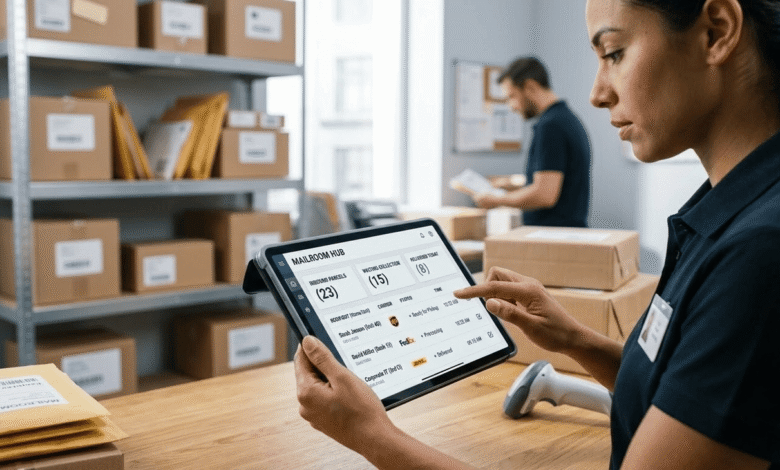
Smart parcel management brings these activities together in a consistent digital workflow.
Digital Intake Makes Receiving More Efficient
One of the first opportunities for improvement is the point at which a package enters the organization.
Manual parcel management may require staff to type information into spreadsheets or write details into physical logs. This takes time and introduces the possibility of incomplete or inaccurate records.
Parcel management software digitizes the intake process. Staff can record incoming packages and associate them with recipients while creating a searchable record of the delivery.
This provides a reliable starting point for everything that happens afterward.
| Manual Parcel Management | Smart Parcel Management |
| Handwritten or spreadsheet logs | Centralized digital records |
| Manual recipient messages | Automated notifications |
| Physical package searches | Searchable parcel information |
| Limited collection records | Digital collection history |
| Difficult performance reporting | Operational parcel data |
Automated Notifications Keep Packages Moving
Receiving a package is only the beginning of the process. The recipient also needs to know it has arrived.
When notifications depend on staff manually sending emails, making calls, or delivering messages, delays are almost inevitable during busy periods.
Automated notifications remove much of this repetitive work. Once an incoming package has been processed, the recipient can be alerted without requiring another manual step.
Faster notifications encourage quicker collections, which can reduce the number of packages accumulating in storage areas.
This is particularly useful in workplaces with hybrid schedules, where employees may not be present every day. Timely digital communication allows recipients to know what is waiting for them even when they are away from the workplace.
Better Visibility Reduces Time Spent Searching
A common parcel management problem is not necessarily that a package is lost, but that employees cannot quickly determine where it is.
A digital parcel record provides staff with a centralized source of information about incoming deliveries and their current status.
Instead of searching through shelves, checking spreadsheets, or asking colleagues, staff can review parcel information before taking further action.
Greater visibility can help answer everyday questions such as:
- When did the package arrive?
- Who is the intended recipient?
- Has the recipient been notified?
- Is the package still awaiting collection?
- Has it already been collected?
Being able to answer these questions quickly reduces interruptions and makes parcel handling more predictable.
Visibility matters because every minute spent searching for a delivery is time that could have been spent on more valuable work.
Digital Records Strengthen Accountability
Businesses also need confidence that incoming packages are handled consistently.
This becomes especially important when deliveries contain laptops, business documents, equipment, or other valuable items. If a delivery is disputed, relying on memory or an incomplete paper log can make the situation difficult to resolve.
Smart parcel management creates a digital history of package activity.
Depending on the workflow, records can include arrival information, recipient details, notification status, collection confirmation, and proof of handover.
Maintaining this information creates a clearer chain of custody and helps staff investigate delivery questions using recorded information rather than assumptions.
Parcel Data Can Reveal Operational Patterns
Digitization also turns package activity into useful operational data.
Manual logs may record individual deliveries, but analyzing them at scale is cumbersome. Parcel management software makes it easier to understand patterns in how packages move through an organization.
Teams can monitor factors such as:
- Daily delivery volumes
- Peak receiving periods
- Outstanding collections
- Processing activity
- Collection turnaround times
- Changes in package volume over time
These insights can inform practical decisions about staffing, storage capacity, and receiving procedures.
For example, consistently higher volumes on particular days may indicate a need to adjust staff schedules or dedicate additional temporary storage space.
Smart Parcel Management Supports Business Growth
Parcel volumes tend to increase as organizations add employees, locations, and operational activity. A manual process that works for 20 deliveries per day may become difficult to sustain at 100 or 200.
This is where smart parcel management becomes particularly valuable.
Digital workflows provide a repeatable process that can accommodate increasing volumes without requiring administrative effort to rise at the same rate. Staff can continue using consistent procedures for receiving, notification, tracking, and collection as the organization expands.
Ultimately, smart parcel management is about more than knowing where packages are. It creates a structured system for handling an increasingly common business activity.
By replacing fragmented manual processes with digital records, automated notifications, stronger accountability, and operational visibility, businesses can make parcel management faster and more reliable while freeing employees to concentrate on higher-value responsibilities.