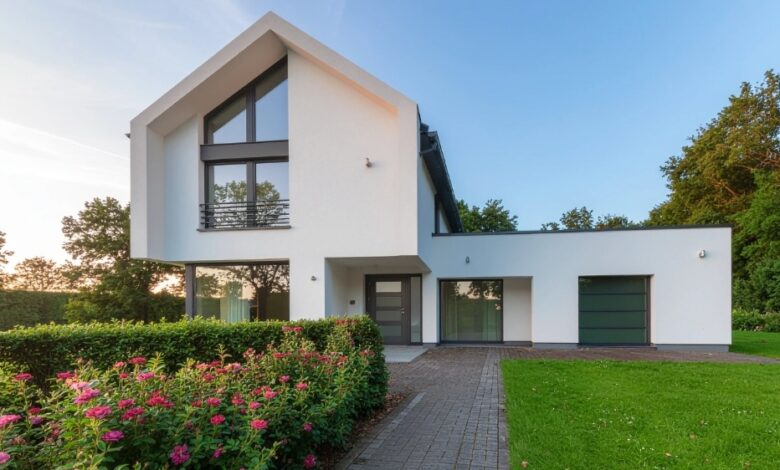
Professional landscaping involves planning, installing, and maintaining the outdoor areas of a residential or commercial property. It includes plant selection, soil preparation, irrigation, hardscape construction, grading for drainage, and ongoing maintenance. Rather than treating each element separately, a well-designed landscape brings these components together to support healthy plant growth, efficient water use, and long-term performance.
According to the National Association of Landscape Professionals (NALP), the green industry, including landscaping and lawn care, employed approximately 1.3 million workers in the United States and generated more than $130 billion in annual revenue in 2023. Residential projects account for a significant share of this market, driven by new construction and home improvement activity.
Climate and soil conditions also influence how a landscape should be designed. Professional landscaping companies Fort Collins CO work in a semi-arid environment with clay-heavy soils, seasonal temperature swings, and limited annual precipitation.
These conditions require different plant selections, irrigation strategies, and drainage solutions than landscapes in coastal or humid regions.
What the Design Phase of a Landscaping Project Involves
A professional landscaping project begins with a site analysis. The landscape designer or contractor walks the property and documents the existing conditions: the slope of the yard and where water flows during rainfall, the locations of existing trees and utilities, the soil type, the sun exposure in different areas of the yard at different times of day, and the existing hardscape (sidewalks, driveway, patios).
Slope analysis is particularly important in Fort Collins because much of the city was developed on land with moderate to significant grade changes. A yard that slopes toward the foundation of the house creates drainage problems that landscaping must address, typically through regrading, berms, or French drain installations.
Soil testing reveals the pH, organic matter content, and nutrient levels of the existing soil. Larimer County soils are predominantly clay-loam with a high pH (alkaline), typically in the 7.5 to 8.5 range. Most ornamental plants prefer a neutral to slightly acidic pH of 6.0 to 7.0. Amending the soil with sulfur and organic matter before planting is a standard step in this region.
After the site analysis, the designer produces a plan drawing showing the proposed layout of planting areas, lawn areas, hardscape, irrigation zones, and drainage modifications. The plan guides procurement, installation sequencing, and irrigation design.
How Plant Selection Works in the Colorado Front Range
Plant selection for a Fort Collins yard must account for USDA Hardiness Zone 5b, which is the zone that covers most of Larimer County. Zone 5b has an average annual extreme minimum temperature between -15 and -10 degrees Fahrenheit. Plants rated for Zone 5 or colder survive the winter temperatures. Plants rated only to Zone 7 or 8 will not.
Beyond cold hardiness, Front Range plant selection considers drought tolerance. Fort Collins averages approximately 15 inches of precipitation per year, well below the 30 to 40 inches that many traditional ornamental plants require. The Colorado State University Extension Office maintains a list of plants rated for Colorado’s semi-arid conditions. This list, along with the Plant Select program (a collaboration between Denver Botanic Gardens and Colorado State University), identifies plants proven to perform in the specific conditions of the region.
Native plants, including Rocky Mountain penstemon, prairie zinnia, Apache plume, and blue grama grass, are adapted to the local soil and precipitation levels and require no supplemental irrigation after establishment. They also support local pollinators, including native bee species that are important components of the regional ecosystem.
How Irrigation Systems Are Designed and Installed
A residential irrigation system consists of a controller (timer), valves, pipes, and heads or drip emitters that deliver water to specific planting zones. The system is designed around the water requirements of the plants in each zone, because turf grass requires a fundamentally different irrigation schedule than a xeriscape planting of drought-tolerant perennials.
Irrigation systems in Fort Collins are governed by the City of Fort Collins Stormwater Master Plan, which restricts watering practices to reduce storm drain loading and promote water conservation. The city has a tiered water rate structure that increases the cost per unit of water as usage rises, which creates a financial incentive to design and operate irrigation systems efficiently.
Smart irrigation controllers, which adjust watering schedules based on weather data, plant type, and soil conditions, are the current standard for new irrigation installations. Controllers that connect to the EPA’s WaterSense weather-based data qualify for the WaterSense label, which indicates they are certified to reduce water use by at least 15% compared to timer-based controllers.
What Hardscape Installation Involves
Hardscape refers to the non-plant elements of a landscape: patios, walkways, retaining walls, steps, and edging. In Colorado’s climate, hardscape material selection must account for freeze-thaw cycling. Materials that retain moisture and are not frost-resistant crack and heave over multiple winters.
Concrete pavers are the most durable patio and walkway material in Colorado. They are produced with a high compressive strength (typically 8,000 psi or greater) and are designed to accommodate the freeze-thaw cycle without cracking. Individual pavers can be replaced if they become damaged without disturbing the surrounding installation.
Poured concrete is less expensive than pavers for large areas, but is more susceptible to cracking from freeze-thaw movement. Control joints (planned weak spots cut into the concrete surface) direct inevitable cracking to predictable locations.
Retaining walls are necessary wherever grade changes of more than 12 to 18 inches occur in a landscape. Colorado’s clay soils exert significant lateral pressure on retaining walls, which affects the engineering requirements. Retaining walls over 4 feet in height require engineered drawings and building permits in Larimer County.
What Seasonal Maintenance Looks Like in the Front Range
A professional landscape maintenance schedule for a Fort Collins yard follows the four-season calendar with tasks specific to each period.
Spring maintenance begins after the last frost risk (typically late April in Fort Collins) and includes cutting back perennials that were left standing through winter, fertilizing established plantings, and performing the first mowing of turf at a high blade height to avoid stressing grass emerging from dormancy.
Summer maintenance focuses on irrigation management, weed control, and monitoring for pest and disease issues. Front Range summers with extended periods above 90 degrees Fahrenheit stress cool-season grasses, which go partially dormant in July and August. Irrigation scheduling must balance keeping turf alive with avoiding overwatering that promotes disease.
Fall maintenance includes overseeding thin turf areas in September (the optimal seeding window for cool-season grasses in Colorado), cutting trees and shrubs, applying pre-emergent herbicides for weed control in spring, and shutting down and winterizing the irrigation system before the first hard freeze.
What to Know
Professional landscaping begins with site analysis covering slope, soil type, sun exposure, and existing utilities. Soil testing in Larimer County typically reveals alkaline pH (7.5 to 8.5) that requires amendment before planting. Plant selection must account for USDA Zone 5b winter temperatures and the semi-arid climate with approximately 15 inches of annual precipitation. Irrigation design separates turf and planting zones and uses smart controllers to reduce water use. Retaining walls over 4 feet require engineered drawings and permits in Larimer County. Seasonal maintenance follows a four-season calendar with specific tasks tied to frost dates and grass dormancy cycles.