Introduction
The cryptocurrency industry has entered a new stage of maturity. What was once considered an experimental financial sector is now attracting institutional investors, multinational businesses, and government oversight at an unprecedented pace. As digital assets become more integrated into global financial systems, regulatory compliance has shifted from being an optional consideration to a core business requirement.
For crypto exchanges, payment platforms, token issuers, and fintech startups, understanding licensing requirements is now essential for sustainable growth. Companies that proactively adapt to evolving regulations are often better positioned to expand internationally, build customer trust, and reduce operational risks. Keeping up with the latest developments surrounding crypto exchange license requirements can help businesses prepare for changing legal frameworks while making informed strategic decisions.
The Global Shift Toward Stronger Crypto Regulation
Over the past several years, regulators worldwide have intensified their focus on digital asset businesses. Instead of banning cryptocurrency outright, many jurisdictions have introduced licensing frameworks designed to encourage innovation while protecting consumers and financial markets.
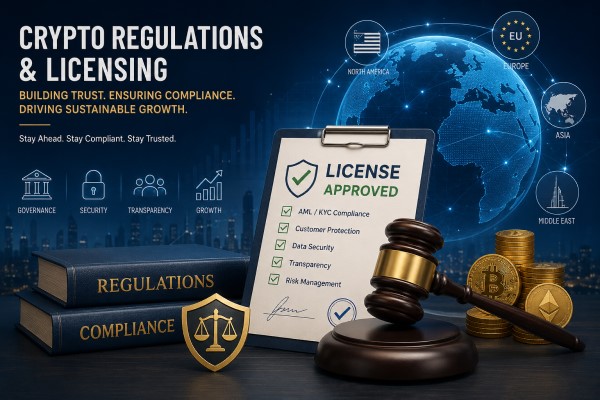
Countries across North America, Europe, Asia, and the Middle East are developing clearer standards for exchanges, custodians, and digital payment providers. These frameworks typically address anti-money laundering (AML) procedures, customer verification, cybersecurity, operational transparency, and financial reporting.
This regulatory evolution reflects a broader industry trend. Governments increasingly recognize that digital assets are becoming part of mainstream finance, making oversight necessary rather than optional. Businesses that understand these regulatory expectations early can better prepare for expansion while minimizing compliance-related disruptions.
Why Licensing Matters Beyond Legal Compliance
Many businesses initially view licensing simply as a legal obligation. In reality, obtaining the appropriate regulatory approvals often creates broader strategic advantages.
Licensed companies generally inspire greater confidence among customers, institutional investors, and business partners. Financial institutions may also be more willing to establish banking relationships with regulated crypto firms, improving access to payment services and capital.
Licensing also demonstrates a commitment to responsible operations. Strong compliance programs help reduce exposure to fraud, financial crime, and operational risk while improving internal governance.
As institutional participation in digital assets continues to increase, companies with established compliance practices may find themselves better positioned to compete in an increasingly regulated marketplace.
Regulatory Trends Businesses Should Watch in 2026
The regulatory landscape continues to evolve rapidly, making ongoing monitoring essential for crypto businesses operating across multiple jurisdictions.
One significant trend is the growing coordination between international regulators. Governments are increasingly sharing standards and aligning compliance expectations to reduce regulatory inconsistencies.
Another development involves stronger consumer protection requirements. Regulators are placing greater emphasis on disclosure obligations, custody standards, cybersecurity controls, and transparent risk management practices.
Stablecoins, decentralized finance (DeFi), tokenized assets, and cross-border payment services are also receiving increased regulatory attention. As these technologies mature, businesses should expect more detailed guidance covering licensing, reporting obligations, and operational oversight.
Companies that stay informed about emerging regulatory developments can adjust their compliance strategies proactively rather than reacting after new rules take effect.
Building a Sustainable Compliance Strategy
Regulatory compliance should not be treated as a one-time project completed during licensing. Instead, successful organizations integrate compliance into their overall business strategy.
This begins with establishing clear governance structures, maintaining accurate documentation, and implementing ongoing monitoring systems. Regular internal audits, employee training, cybersecurity assessments, and risk evaluations help organizations maintain regulatory standards as operations grow.
Businesses operating internationally should also recognize that licensing requirements vary significantly between jurisdictions. Expanding into new markets often requires careful legal analysis, local expertise, and continuous monitoring of regulatory updates.
Investing in compliance infrastructure early can reduce long-term costs by minimizing legal complications, operational interruptions, and reputational damage.
Conclusion
As the cryptocurrency industry continues its transition toward mainstream financial adoption, regulatory readiness has become a defining characteristic of successful businesses. Licensing is no longer viewed solely as a legal requirement but as a foundation for credibility, operational stability, and long-term growth.
Organizations that understand evolving regulations, maintain strong compliance programs, and adapt to changing legal environments are better equipped to navigate future market developments. While regulatory frameworks will continue to evolve throughout 2026 and beyond, businesses that prioritize transparency and responsible governance will likely remain the strongest competitors in the digital asset ecosystem.
In an industry where trust is increasingly valuable, a proactive approach to compliance and licensing provides more than legal certainty—it establishes the foundation for sustainable innovation and global business expansion.