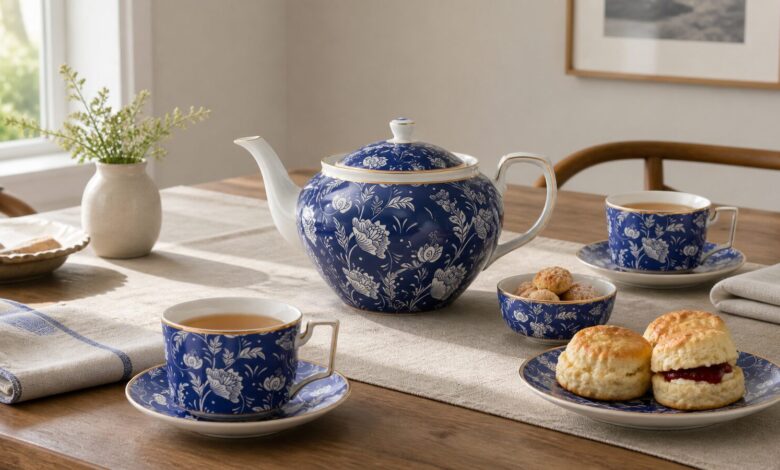
A casual English afternoon tea should feel welcoming before it feels impressive. The table needs enough structure for guests to reach the tea and food comfortably, but it does not need to reproduce a hotel service or a formal historical setting.
Afternoon tea developed as a social refreshment rather than a heavy meal. That distinction is useful for a modern host: the aim is a manageable spread, tea brewed with care, and a table where conversation is not blocked by serving pieces.
Start with the people and the table
Count seats before choosing serving pieces. A small dining table may work better with one teapot and a single plate of food passed around than with a crowded central display. A longer table can support a tiered stand, milk jug, sugar bowl, and extra cups without forcing guests to reach over one another.
Sit briefly in each place before the table is finished. Check whether a guest can lift a cup without touching a plate, whether the teapot handle is easy to reach, and whether the central arrangement leaves a clear view across the table.
Build the layout from the centre
A tiered stand can create height and save horizontal space, but it is optional. If it blocks faces or makes the table feel ceremonial, use two low platters instead. The practical test is whether food can be reached and replenished without moving several other objects first.
- Keep the tallest serving piece away from the main line of sight.
- Leave open space around the teapot so it can be lifted and returned safely.
- Give every guest a stable place for a cup and saucer or a mug.
- Place napkins where they can be reached without crossing the hot-water area.
When space is tight, reserve the centre for food and place the teapot near the host. That separates the busiest pouring area from the dishes being passed around.
Choose a useful tea service
A coordinated service gives the table a visual foundation, but matching every piece is unnecessary. Begin with the items that affect use: a teapot that pours cleanly, cups that feel comfortable at the rim, and saucers or small plates that fit the available surface.
Looking through eastartisan.com can help clarify whether a complete service, a smaller pot-and-cup combination, or a few coordinated pieces suit the occasion. The right choice is the set that leaves enough room to pour, pass food, and clear the table without difficulty.
Milk jugs, sugar bowls, and cake stands should be added only when they will be used. A half-empty table with comfortable spacing often feels more generous than a full table where every movement requires care.
Mix patterns with a clear hierarchy
Vintage floral plates can sit comfortably beside modern porcelain when one element provides a visual anchor. Use the calmest pieces for the largest surfaces, then allow a smaller number of patterned cups, side plates, or napkins to provide character.
Repeating one colour is often enough to hold mixed pieces together. A blue line in a cup pattern might return in the napkins; a warm cream teapot might connect white plates with a wooden table. The purpose is not perfect coordination, but an arrangement the eye can read without competing focal points.
Keep the menu achievable
A casual table does not require every traditional layer of sandwiches, scones, pastries, and cakes. Choose a small number of items that can be prepared or purchased without keeping the host in the kitchen after guests arrive.
A useful structure is one savoury option, one baked item, and one sweet finish. The quantities can then follow the number of guests and the time of day. If the gathering replaces lunch, add substance; if it sits between meals, smaller portions are usually easier to enjoy.
Store-bought food is entirely suitable. Arrange it shortly before serving and follow the baker’s or package directions for reheating. Warm scones gently and check them early so they do not dry out; keep cream and other perishable fillings refrigerated until they are needed.
Plan the brewing sequence
Tea should be selected before the table is crowded with food. One dependable black tea is enough for a small gathering, while a second caffeine-free or lighter option can be kept ready if guests have different preferences.
Water temperature and infusion time depend on the tea rather than the occasion. The UK Tea & Infusions Association brewing guide recommends following the instructions for the particular tea and provides different times and temperatures across black, green, oolong, and scented teas. This is more reliable than applying one fixed rule to every pot.
Warm the teapot with hot water, empty it, and then brew according to the selected leaves. When the infusion is ready, remove the infuser or separate the liquor from the leaves so it does not continue becoming stronger while guests talk.
Serve without creating a queue
If one person pours, place the pot where that person can lift it without reaching across food. If guests serve themselves, make sure the handle faces an open side of the table and that there is a clear place to return the pot.
Offer milk, lemon, or sweetener according to the tea and the preferences at the table rather than presenting them as compulsory rules. A small jug and bowl can be passed more easily than several large containers, especially when the table is compact.
Prepare for refills and clearing
Keep additional hot water, a second cloth, and replacement teaspoons nearby but off the main table. A sideboard or kitchen counter can hold supplies without becoming part of the display. This makes refilling feel calm and prevents used dishes from collecting beside fresh food.
Clear only what is genuinely finished. Removing every plate too quickly can interrupt conversation, while leaving empty stands in the centre makes the table feel untended. A relaxed host watches the rhythm of the group rather than following a rigid service order.
Let comfort set the tone
The best casual afternoon tea table supports the gathering without demanding attention for itself. Clear sightlines, a manageable menu, correctly brewed tea, and enough room for each guest do more than elaborate etiquette to create a generous atmosphere.
Once those practical decisions are made, the host can sit down too. That is the clearest sign that the table has been planned well.