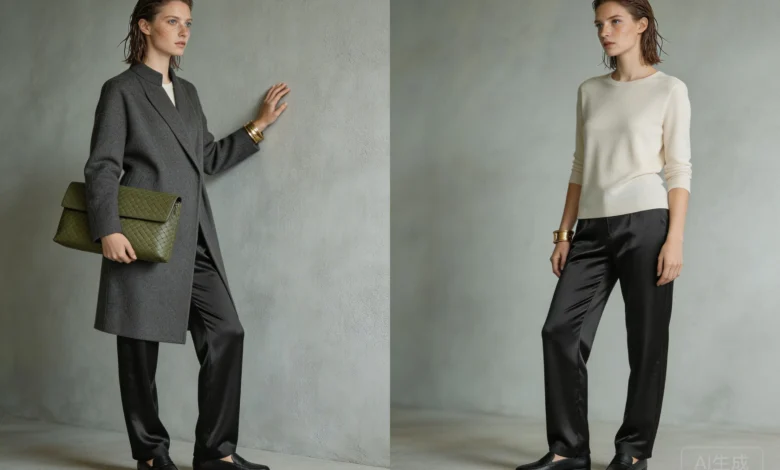
For decades, wealth announced itself loudly. It was about flashy logos, lavish purchases, and ostentatious displays of prestige. Today, however, luxury has taken on a new form. One that defines the affluent consumers of our time. Quiet luxury, defined by its elegant simplicity, superior craftsmanship, and mindful consumption, is now the hallmark of contemporary luxury. Rather than proving their worth through display, consumers today prefer quality, authenticity, and exclusivity known only to those who appreciate such things. This shift reflects a broader cultural transformation where sophistication lies not in owning more, but in choosing better.
Quiet luxury is directly connected with the growing trend of minimalism. Studies on inconspicuous minimalists have indicated that not all minimalists shun luxury. In fact, a substantial proportion prefer quality goods designed to be understated and without obvious brand names. Such consumers value the durability, craftsmanship, and ownership of their possessions more than the mere accumulation of material items. Their buying behaviour is based on their own personal principles rather than the need to show off to a wider audience.
Another factor that has contributed to the allure of quiet luxury is the shifting perspectives regarding status. In earlier years, luxury companies were very dependent on logos and designs that were easily identifiable as symbols of wealth. However, as luxury items have become more common and “masstige” items are prevalent in the market, logo-driven marketing has become less exclusive. The modern luxury consumer wants to distinguish himself subtly and not make a loud noise about his wealth. According to industry experts, quiet luxury offers people the ability to differentiate themselves from other knowledgeable consumers without making a fuss. Exclusivity now lies in discernment rather than visibility.
The rise in popularity of quiet luxury is also due to the shift in perceptions about what success means. Younger generations tend to define success not through opulence but rather through freedom, harmony, and deliberate action. The minimalist trend has made consumers reconsider the notion that happiness is only attainable when you own things. Hence, they have opted to buy fewer items that deliver better results and last longer. It does not matter whether it is an item of clothing, a piece of jewellery, or a gadget; consumers want quality and functionality rather than eye-catching design.
Further research indicates that quiet luxury is often driven not by conspicuous consumption but by social connections. Consumers are no longer interested in being approved by the general public but by those who share common cultural backgrounds, knowledge, and taste. Quiet luxury offers the feeling of being part of a group of like-minded people who understand quality workmanship, heritage, and design. The act of buying is no longer about showing off one’s status but about being a member of a community of sophisticated consumers.
The concept of quiet luxury has also made its way into other lifestyle segments like fashion, technology, travel, and consumer goods. In each of these segments, there is an increased demand for products that are high-quality yet simple. In the case of vaping devices, for example, customers are looking for products that emphasise performance, elegance, and convenience rather than flashy designs. Examples of such products include Crystal Pro Switch 30K Prefilled Vape Kit, which have gained popularity because they offer a seamless experience that aligns with the preferences of modern consumers who value functionality and elegance.
The difference between quiet luxury and flamboyant wealth represents an evolution of culture. Flamboyant wealth tends to crave validation through visibility and recognition, while quiet luxury promotes confidence, discretion, and intentionality. This implies that being affluent is not about advertising all the time because it is not dependent on external validation but on one’s own happiness. People who embrace this lifestyle are usually not bothered about following trends but value longevity and performance in their products.
As minimalist trends continue to shape consumer behaviour, quiet luxury will almost certainly retain its position as a major player in determining modern-day prosperity. The trend is not just a matter of aesthetics, but an expression of shifting values surrounding identity, prestige, and consumption. In a world inundated with visual stimuli and self-expression, the ability to exercise restraint has come to be seen as a hallmark of refinement. Luxury in the future might not go to those who flaunt their riches, but to those who know that true luxury is often subtle.