Cold storage has become a crucial element in the way modern businesses operate. Whether it’s supermarkets, pharmaceutical companies, catering services, or logistics providers, the reliance on temperature-controlled storage has never been greater.
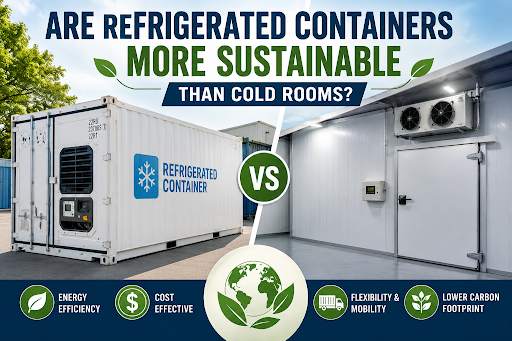
But it’s not just about keeping products fresh; there’s also the pressing need to minimize environmental impact. With electricity costs on the rise and increasing pressure to cut down carbon emissions, companies are actively seeking greener cold storage options. This has led to a significant discussion: are refrigerated containers a more sustainable choice compared to traditional cold rooms?
Both systems provide dependable cooling, yet they function quite differently. A cold room is a permanent refrigerated space constructed within a warehouse or facility, while refrigerated containers are portable units that offer flexible cold storage solutions.
When businesses look for refrigerated container hire, or even consider purchasing or renting them, they often find themselves trying to strike a balance between sustainability, efficiency, and operating costs. The solution isn’t always straightforward, as each business has its own unique storage requirements. Some may need temporary cold storage during peak seasons, while others might require a constant refrigerated environment that operates 24/7.
Recent research into cold-chain logistics reveals that refrigeration systems consume a significant amount of energy in temperature-controlled facilities. Studies released in 2025 indicated that cold chain warehouses can use four to five times more energy than typical commercial buildings.
On the flip side, modern reefer containers are now equipped with advanced insulation, smart monitoring systems, and energy-efficient compressors, all of which contribute to lower electricity consumption. This evolution has made portable refrigeration systems much more sustainable than they were just a decade ago.
Understanding Modern Cold Storage Solutions
What Are Refrigerated Containers?
A refrigerated container, commonly known as a reefer container, is essentially a shipping container equipped with its own cooling system. These containers can keep temperatures anywhere from frozen to chilled, depending on what a business needs.
Unlike standard cold rooms, refrigerated containers are portable and can be used almost anywhere as long as there’s a power source. They’re often utilized for temporary cold storage, transport logistics, and urgent refrigeration situations. The greatest benefit of refrigerated containers is their flexibility. Think of them as mobile cold rooms that can travel wherever your business takes you.
For instance, a catering company might set one up next to an event venue, while a supermarket could use one during busy seasonal times. This mobility eliminates the need for permanent construction, which usually involves a lot of building materials and energy-consuming installations.
Modern refrigerated units also include energy-saving technology such as smart temperature controls and improved insulation panels. Industry reports from 2025 show that advanced reefers can significantly lower energy waste through variable-speed cooling systems and better airflow management. Businesses looking for refrigerated containers hire often choose these systems because they deliver efficient cooling without the long-term infrastructure costs linked to permanent cold rooms.
What Are Cold Rooms?
Cold rooms are essentially permanent refrigerated spaces that you find inside buildings or warehouses. They’re a go-to solution for businesses that need to store large quantities of goods consistently. Food manufacturers, pharmaceutical companies, and distribution centers often depend on these cold rooms because they offer ample storage and operate continuously.When designed well, cold rooms can be incredibly efficient.
Nowadays, many facilities incorporate smart automation systems, top-notch insulation, and energy-efficient compressors. Recent research in the cold-chain industry shows that refrigeration can make up to 70% of the total energy consumption in cold storage warehouses. This highlights how efficiency upgrades can significantly lessen the environmental footprint.
However, there are some downsides. Cold rooms require a lot of construction and a fixed infrastructure. Building one takes up materials, labor, and energy even before it starts operating. If a business’s needs change, it can be tough and costly to modify or move the system. This is where refrigerated containers shine, as they provide mobility without the need for permanent construction.
Why Sustainability Matters in Cold Storage
Energy Consumption and Carbon Emissions
Cold storage systems are notorious for their hefty electricity bills since refrigeration equipment runs non-stop. Imagine a car engine revving at full throttle all day—that’s what a poorly designed cooling system feels like. The more energy it guzzles, the bigger its carbon footprint grows.
According to reports from the cold-chain industry, refrigerated facilities consume way more electricity than standard warehouses, which makes sustainability a pressing concern. On a brighter note, refrigerated containers have come a long way in recent years. Today’s reefer systems boast eco-friendly refrigerants, smart monitoring, and top-notch insulation technologies.
Some even harness solar power! A study published in 2025 pointed out that sustainable refrigeration technologies can significantly cut down greenhouse gas emissions by using efficient cooling methods and natural refrigerants.
Cold rooms can also go green if businesses choose to invest in modern systems. By implementing smart controls, conducting energy audits, and performing preventive maintenance, they can slash electricity usage. Plus, refrigerated containers typically need less overall infrastructure, which helps reduce the environmental impact associated with construction and expansion projects.
Comparing Refrigerated Containers and Cold Rooms
| Feature | Refrigerated Containers | Cold Rooms |
| Mobility | Portable and flexible | Fixed location |
| Installation Time | Quick setup | Long construction period |
| Energy Efficiency | High with modern units | High with advanced systems |
| Scalability | Easy to expand | Expensive expansion |
| Sustainability | Lower infrastructure impact | Efficient for large operations |
| Maintenance | Easier replacement | Complex repairs |
Mobility and Flexibility
One of the biggest perks of using refrigerated containers is their flexibility. Businesses can easily relocate these units as their needs change, which means they can skip the hassle of unnecessary construction. It’s kind of like renting an apartment instead of building a new house every time you move. This kind of adaptability allows companies to cut down on material waste and dodge costly infrastructure changes.
For businesses that rent refrigerated containers, there’s often a significant cost-saving and waste reduction since they only pay for the storage space when they actually need it. This is especially beneficial for seasonal businesses. Rather than investing in permanent cold rooms that might sit mostly empty for a good chunk of the year, companies can simply rent reefer containers during their peak times.
That said, cold rooms still have their place, especially for operations that need large-scale storage on a constant basis. For instance, a food processing plant that handles thousands of products every day might find that having permanent cold rooms is more practical due to their capacity and long-term efficiency.
Benefits of Refrigerated Container Hire
Cost-Effective Temporary Storage
Renting refrigerated containers has really taken off lately, and it’s easy to see why. Businesses are keen to dodge those hefty upfront costs. They can simply rent units for short-term events, seasonal spikes, or even emergency storage without shelling out a fortune on construction. This approach not only cuts down on financial risk but also helps lessen the environmental footprint.
Plus, temporary refrigerated storage is a smart way to save energy. Companies only need to power the container when it’s in use, rather than keeping a huge cold room running all year round. This efficient model makes renting refrigerated containers a really appealing and sustainable option for a variety of industries.
Reduced Construction Waste
Construction projects can create a lot of environmental waste. When it comes to permanent cold rooms, they need materials like steel, insulation, flooring systems, and various building modifications. On the other hand, refrigerated containers are already prebuilt and ready to go.
By reusing existing reefer containers, we can cut down on the need for new materials and help reduce emissions linked to construction. This circular approach really aligns with sustainability goals, as it allows businesses to make the most of their current equipment instead of always building new facilities.
Refrigerated Containers for Sale vs Permanent Cold Rooms
Long-Term Investment Value
Businesses searching for refrigerated containers for sale often want a balance between ownership and flexibility. Purchasing a reefer container provides long-term cold storage without the expense of constructing a permanent facility. Owners can relocate or resell the unit later, which increases overall asset value.
Cold rooms usually require a much larger financial commitment. While they provide excellent storage capacity, they lack portability. If a business relocates, the cold room cannot simply move with it. This makes refrigerated containers more adaptable for companies expecting operational changes in the future.
Scalability for Expanding Businesses
Scaling a cold room often requires major renovations. Expanding refrigeration capacity means additional construction work, downtime, and increased costs. Refrigerated containers offer a simpler solution because businesses can add extra units whenever demand increases.
This modular approach reduces waste and improves operational efficiency. Companies can grow step by step instead of overbuilding storage capacity from the beginning.
Conclusion
Refrigerated containers and cold rooms are both essential in the world of cold storage, but when it comes to flexibility and temporary needs, refrigerated containers often take the lead in sustainability.
Their portability, minimal infrastructure demands, and advancements in energy-efficient technology make them a greener choice for various industries. By opting for refrigerated container hire, businesses can cut down on construction waste, reduce energy consumption, and steer clear of hefty long-term expenses.
On the other hand, cold rooms still hold significant value for larger operations that require consistent refrigeration and ample storage space. A well-constructed cold room, equipped with modern insulation and intelligent cooling systems, can also deliver impressive sustainability results. Ultimately, the best option hinges on the size of the business, how long storage is needed, and specific operational requirements.
For companies looking for adaptable cold storage solutions, refrigerated containers for sale and refrigerated containers for hire offer a practical balance between sustainability, efficiency, and cost savings. Businesses wanting reliable refrigerated storage solutions can explore Conrail Refrigerated Containers for flexible options tailored to different industries.
FAQs
Are refrigerated containers more energy-efficient than cold rooms?
Modern refrigerated containers can be highly energy-efficient because they use advanced insulation, smart temperature controls, and efficient compressors. Their smaller size often reduces overall electricity usage compared to large cold rooms.
What industries use refrigerated containers the most?
Food and beverage companies, pharmaceutical businesses, event organizers, supermarkets, and logistics providers commonly use refrigerated containers for temporary and mobile cold storage.
Are refrigerated containers environmentally friendly?
Yes, many modern refrigerated containers use eco-friendly refrigerants and energy-saving systems. Their reusable structure also reduces construction waste compared to building permanent cold rooms.
Is refrigerated container hire cheaper than building a cold room?
In many cases, yes. Refrigerated container hire eliminates large construction costs and offers flexible short-term storage without major infrastructure investment.
Can refrigerated containers replace cold rooms completely?
Not always. Large operations with continuous storage needs may still benefit more from permanent cold rooms. Refrigerated containers work best for flexible, temporary, or scalable cold storage requirements.