House flies are among the most common insects found around homes, gardens, and outdoor spaces. Their quick movements, buzzing sounds, and habit of landing on food make them a frustrating household pest. Many people wonder, how big do house flies get and whether a large fly inside their home is a normal house fly or a different species.
The average house fly is actually quite small, but its size can vary depending on age, food availability, and environmental conditions. Understanding their size, life cycle, and habits can help homeowners identify and manage fly problems more effectively.
Average Size of a House Fly
A common house fly, scientifically known as Musca domestica, usually grows to around 6 to 7 millimeters long, which is about ¼ inch in length. Some smaller individuals may measure around 4 millimeters, while larger house flies can reach approximately 8 millimeters. citeturn0search0turn0search4
Although their bodies appear larger when they are flying close to people, most house flies are smaller than a fingernail. Their wings also add to their visible size, with a wingspan that can make them appear much bigger than their actual body length. citeturn0search12
Female house flies are usually slightly larger than males. They have wider spaces between their eyes, while male flies typically have eyes that are closer together. citeturn0search1
Why Do Some House Flies Look Bigger?
Sometimes homeowners notice unusually large flies and assume they are oversized house flies. However, several factors can make flies appear larger.
Age of the Fly
Adult flies that have recently emerged from the pupal stage may look smaller at first. As they mature, their bodies become stronger and more developed, making them appear larger.
Species Differences
Not every large fly inside a home is a common house fly. Species such as blow flies, cluster flies, and horse flies can be larger and may be mistaken for house flies.
For example, some larger fly species can exceed 10 millimeters in length, while common house flies usually remain under that size range.
Environmental Conditions
Temperature and food availability influence insect growth. Warmer environments with plenty of organic material can support faster development and healthier adult flies.
House Fly Appearance and Identification
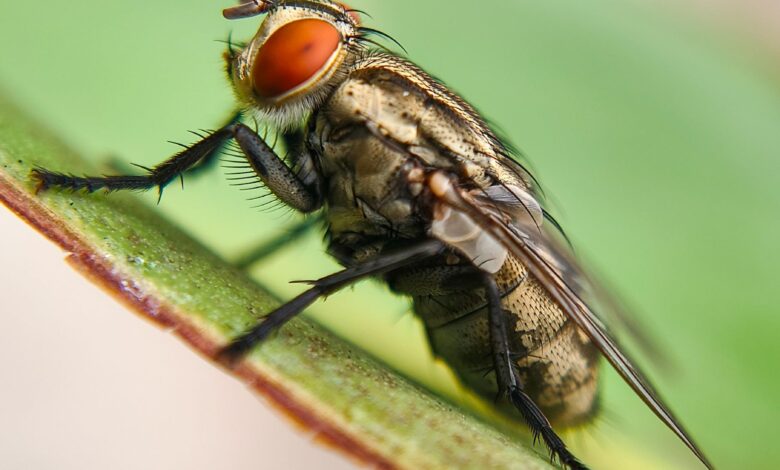
A typical house fly has a gray body with four dark stripes running along its thorax. It has two transparent wings, large reddish compound eyes, and sponge-like mouthparts used for feeding on liquids. citeturn0search2
Unlike mosquitoes, house flies do not bite humans. Instead, they feed by releasing digestive fluids onto food surfaces and absorbing the dissolved material. This feeding method allows them to pick up and spread bacteria from contaminated areas.
Because they often visit garbage, animal waste, and decaying materials, house flies can transfer unwanted microorganisms to food preparation areas.
House Fly Life Cycle and Growth
The size of a house fly is closely connected to its life cycle. Like many insects, house flies go through four stages:
- Egg
- Larva (maggot)
- Pupa
- Adult fly
Female house flies can lay hundreds of eggs during their lifetime, usually in decaying organic matter such as food waste, manure, or garbage. Under suitable conditions, eggs can hatch quickly, allowing fly populations to increase rapidly. citeturn0search0
Adult house flies typically live for a few weeks, although their lifespan depends on temperature, food supply, and environmental conditions. citeturn0search13
How to Prevent Large Numbers of House Flies at Home
Even though house flies are small, a large infestation can become a serious nuisance. Keeping your home clean and reducing breeding areas are the best ways to control them.
Keep Food Covered
Open food attracts flies quickly. Store leftovers in sealed containers and clean kitchen surfaces regularly.
Manage Garbage Properly
Trash bins should remain closed and cleaned frequently. Food scraps and organic waste provide ideal breeding areas for flies.
Seal Entry Points
Check windows, doors, vents, and small cracks where flies may enter. Installing screens can reduce indoor fly problems.
Maintain Outdoor Areas
Pet waste, compost piles, and standing organic material around your property can attract flies. Regular outdoor cleaning reduces the chance of infestations.
Are Bigger House Flies More Dangerous?
A larger-looking fly is not necessarily more harmful than a smaller one. The main concern with house flies is not their size but their ability to carry contaminants from dirty surfaces to food and household areas.
A single fly can travel between waste materials and clean surfaces within minutes. This is why proper hygiene and prevention are important, especially in kitchens and dining areas.
Conclusion: House Fly Size and Creating a Cleaner Home Environment
So, how big do house flies get? Most common house flies grow between 4 and 8 millimeters, with an average size of about 6 to 7 millimeters. citeturn0search4turn0search19 While they are small insects, their presence can affect household cleanliness and comfort.
A well-maintained home design also plays a role in preventing pest issues. Features such as properly sealed windows, smart ventilation, organized kitchens, and easy-to-clean interiors can help create healthier living spaces. Websites like Home Comfort Experts provide valuable ideas about home designs, home improvement, and home decor, helping homeowners create comfortable and functional environments. By combining thoughtful interior planning with regular maintenance, homeowners can enjoy cleaner spaces that are more resistant to common household problems like flies.