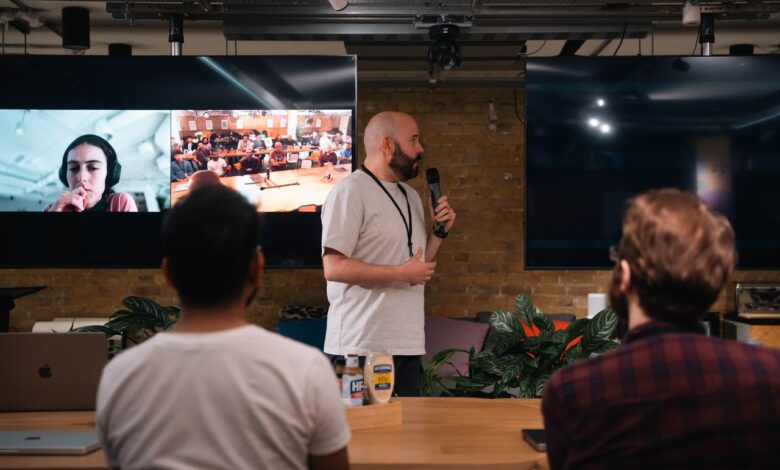
Why Virtual and Hybrid Events Are Here to Stay
A few years ago, many businesses viewed virtual events as a temporary solution. Today, they’re a strategic business tool.
Whether launching a product, hosting a leadership conference or bringing together global teams, organisations are increasingly blending physical and digital experiences to maximise reach without compromising engagement.
The latest UK Conference and Meeting Survey (UKCAMS) 2025 reported that the UK hosted more than 1.08 million conferences and meetings in 2024, with organisations continuing to invest in flexible event formats that support changing audience expectations.
The conversation has shifted from:
“Should we host an online event?”
to
“How do we create an experience that works equally well for every attendee?”
Start With Your Audience, Not the Technology
One of the biggest misconceptions surrounding virtual events is that technology should drive the planning process. In reality, successful events begin with understanding people.
Ask yourself:
- Who is attending?
- What do they hope to gain?
- How will they participate?
- What action should they take afterwards?
Once these questions have been answered, selecting the right technology becomes far easier. An experienced virtual events agency focuses on audience behaviour first and platforms second. Technology should enable engagement, not define it.
Choosing the Right Event Format
Not every business event requires the same approach. Picking the correct format depends on your objectives, audience and available resources.
| Event format | Best suited for | Key advantage |
| Virtual | Training sessions, webinars, thought leadership | Greater accessibility and lower travel requirements |
| Hybrid | Conferences, product launches, company meetings | Wider audience reach with flexible participation |
| In-person | Networking, incentive events, experiential campaigns | Stronger face-to-face relationship building |
Rather than asking which format is best, businesses should ask which format will deliver the strongest outcome for their audience.
Comparing Virtual and Hybrid Models
Selecting the right delivery model depends entirely on your target audience, budget, and primary communication objectives. The matrix below breaks down the key distinctions between these two powerful formats.
| Event criteria | Fully virtual format | Integrated hybrid format |
| Primary focus | Maximum global reach with minimal travel requirements. | Blending in-person intimacy with widespread digital reach. |
| Ideal use cases | Global town halls, technical training, and frequent touchpoints. | Flagship conferences, major product launches, and summits. |
| Technical setup | Cloud-based streaming platforms and remote presenter studios. | On-site multi-camera broadcast crews paired with live web feeds. |
| Delegate experience | Highly focused, concise digital sessions with chat interaction. | Shared dual-audience engagement via unified event apps. |
Proven Strategies for Keeping Digital Delegates Hooked
Whether you choose a fully online or blended model, keeping digital attendees engaged requires thoughtful, user-centric planning:
- Shorter, sharper content modules: Digital attention spans are precious. Keep online presentations under 30 to 45 minutes, packing them with clear insights, visual storytelling, and quick-fire Q&A sessions to maintain high engagement.
- Dedicated online hosts and facilitators: Treat your virtual audience with the same care as in-person guests. Appoint an upbeat digital host to welcome online attendees, introduce speakers, summarise key points, and direct live questions to the stage.
- Interactive digital touchpoints: Encourage active participation using live polls, interactive word clouds, and digital whiteboards. Giving remote delegates a direct voice keeps them invested in the conversation.
- Frictionless, browser-based access: Avoid requiring attendees to download complex software or navigate multi-step logins. Utilising simple, secure, browser-based access ensures delegates can join effortlessly from any device, anywhere in the world.
A Practical Checklist for Planning Successful Virtual and Hybrid Events
Before launching your next event, consider the following:
✔ Have you clearly defined your business objectives?
✔ Is the chosen format right for your audience?
✔ Have both virtual and in-person attendees been considered equally?
✔ Are there opportunities for audience interaction throughout the event?
✔ Has every presenter completed a technical rehearsal?
✔ Is there a contingency plan for technical issues?
✔ Have you planned post-event engagement?
A simple checklist like this helps ensure every decision supports the overall attendee experience.
Trends Shaping Corporate Events in 2026
Corporate events continue to evolve as technology and audience expectations change. Some of the biggest trends include:
1. AI-driven personalisation
Attendees increasingly expect recommendations tailored to their interests.
2. Smarter networking
Technology is making it easier for delegates to connect with relevant people before, during and after events.
3. Content available on demand
Businesses are extending the lifespan of events by making sessions accessible long after the live experience has finished.
4. Experience-led event design
Successful organisations are placing greater emphasis on creating memorable experiences rather than simply delivering information.
The common thread across all these trends is simple. Technology is supporting better human connections, not replacing them.
Final thoughts
Virtual and hybrid events have moved well beyond being alternative delivery methods. They’ve become strategic platforms for communication, collaboration and relationship building.
The businesses achieving the greatest goals are those that focus less on technology and more on creating experiences that people genuinely want to be part of.
Whether delegates are attending from a conference venue or joining remotely from another continent, they all expect the same thing: valuable content, meaningful interaction and a seamless experience.
When businesses put their audience at the centre of every planning decision, virtual and hybrid events become far more than convenient formats. They become powerful opportunities to strengthen brands, build relationships and create lasting business impact.
READ ALSO: Corporate Gifting Trends Florida Businesses Should Follow in 2026