Maintaining a commercial or residential property involves far more than keeping the interior in good shape. The exterior surfaces — driveways, walkways, and parking areas — take a constant beating from traffic, weather, and time. Among the most cost-effective ways to protect and extend the life of asphalt surfaces is sealcoating. Yet many property owners either delay this maintenance or approach it without a clear understanding of what the process involves, what it costs, or why timing matters so much. This article breaks down the essentials so you can make informed decisions about your asphalt investment.
Why Asphalt Surfaces Deteriorate Faster Than You Think
Asphalt is a durable material, but it is not impervious to damage. From the moment a parking lot or driveway is laid, it begins to oxidize. UV rays from the sun break down the binder that holds asphalt aggregate together, causing the surface to become brittle and prone to cracking. Add to that the repeated stress of vehicle loads, the expansion and contraction caused by temperature swings, and the chemical damage from oil and fuel spills, and you have a surface that can deteriorate significantly within just a few years without proper care.
Water infiltration is one of the most destructive forces acting on asphalt. Once cracks form, rainwater seeps into the base layer, weakening the foundation and accelerating the development of potholes. In colder climates, the freeze-thaw cycle turns minor surface cracks into major structural failures almost overnight. This is why preventive maintenance — rather than reactive repair — is always the smarter and more economical approach.
The Role of Oxidation in Surface Degradation
Oxidation causes asphalt to lose its characteristic dark color, fading to a dull gray. This is not merely a cosmetic issue. The color change signals that the oils within the asphalt binder are evaporating, leaving behind a surface that is increasingly rigid and susceptible to cracking under load. Sealcoating replenishes the surface with protective compounds that slow this oxidation process and restore the appearance of the pavement.
What Sealcoating Actually Does
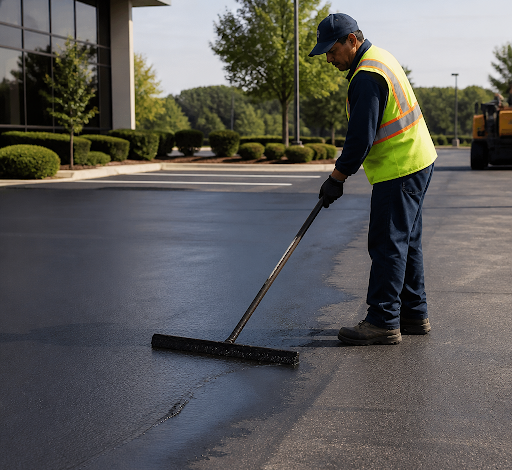
Sealcoating is the application of a liquid protective coating over an existing asphalt surface. The coating acts as a barrier against the elements — blocking UV rays, repelling water, and resisting the penetration of oil and chemical spills. It also restores the dark appearance of the pavement, which improves curb appeal and makes line markings more visible and effective.
It is important to understand what sealcoating does not do. It is not a structural repair. It will not fill deep cracks or restore a surface that has already suffered significant base damage. Sealcoating is a preventive treatment, most effective when applied to asphalt that is in reasonably good condition. Cracks and surface damage should be addressed before sealcoating begins, not after.
Sealcoating vs. Resurfacing: Knowing the Difference
Property owners sometimes confuse sealcoating with resurfacing or repaving. Resurfacing involves laying a new layer of asphalt over the existing surface, while repaving means removing and replacing the entire pavement structure. Sealcoating is a surface-level treatment that costs a fraction of either alternative. When performed on a regular maintenance schedule — typically every two to four years depending on traffic volume and climate — it can significantly delay the need for more expensive interventions.
The Step-by-Step Process of Professional Sealcoating
Understanding what goes into a professional sealcoating job helps property owners evaluate contractors and set realistic expectations. The process is more involved than simply rolling or spraying a coating onto the pavement. A thorough Parking Lot Sealcoating job begins with a detailed inspection of the surface to identify cracks, potholes, and areas of structural weakness. These are repaired and allowed to cure before any sealant is applied. The surface is then thoroughly cleaned — removing dirt, debris, oil stains, and vegetation — because sealcoat will not bond properly to a contaminated surface. Once clean and dry, the sealant is applied in one or two coats using either a squeegee, brush, or spray system depending on the size and condition of the area. Drying and curing time must be respected before the surface is reopened to traffic.
Timing and Weather Conditions Matter
Sealcoating cannot be performed in just any weather. The sealant requires warm temperatures — typically above 50°F — and dry conditions to cure properly. Rain within 24 hours of application can wash away the coating before it sets. Most contractors schedule sealcoating work during late spring through early fall, avoiding the heat of peak summer when the sealant can dry too quickly and unevenly. Planning ahead and scheduling work during optimal weather windows is essential for achieving a durable result.
Integrating Pavement Maintenance Into Your Overall Property Plan
Pavement maintenance should not be treated as an isolated task. It is one component of a broader property upkeep strategy that includes landscaping, drainage management, and exterior structural care. Just as professional landscapers plan and install residential yards with long-term health and aesthetics in mind, asphalt professionals approach sealcoating as part of a lifecycle management plan for your pavement. Coordinating these efforts — ensuring, for example, that landscaping drainage does not direct water runoff onto freshly sealed surfaces — leads to better outcomes across the board.
Property managers who take a holistic view of exterior maintenance tend to spend less over time. Addressing small issues before they become large ones, scheduling preventive treatments on a regular cycle, and working with experienced professionals in each trade all contribute to lower long-term costs and a more attractive, functional property.
Is Asphalt the Right Choice for Your Surface?
Before committing to a sealcoating program, it is worth confirming that asphalt is the right material for your specific application. Asphalt offers significant advantages in terms of cost, installation speed, and repairability, but it does require ongoing maintenance to perform well over time. For a balanced look at the pros and cons of asphalt driveways and surfaces, reviewing expert resources can help you make a well-informed decision about whether asphalt — and the maintenance it requires — aligns with your property goals and budget.
About Asphalt Coatings Company
Asphalt Coatings Company is a professional pavement maintenance contractor with extensive experience serving commercial and residential clients. Their team specializes in sealcoating, crack filling, line striping, and related asphalt services. Known for their thorough preparation process and attention to detail, they bring a systematic, quality-focused approach to every project. Property owners looking for reliable, long-lasting results trust Asphalt Coatings Company to protect and preserve their pavement investments year after year.
Conclusion
Sealcoating is one of the most practical and cost-effective tools available to property owners who want to protect their asphalt surfaces. When performed correctly and on a consistent schedule, it extends pavement life, reduces repair costs, and keeps your property looking well-maintained. The key is understanding the process, choosing qualified professionals, and treating pavement care as an ongoing commitment rather than a one-time fix. With the right approach, your parking lot or driveway can remain functional and attractive for decades.
READ ALSO: EV Charger Installation: What Every Electric Car Owner Should Know