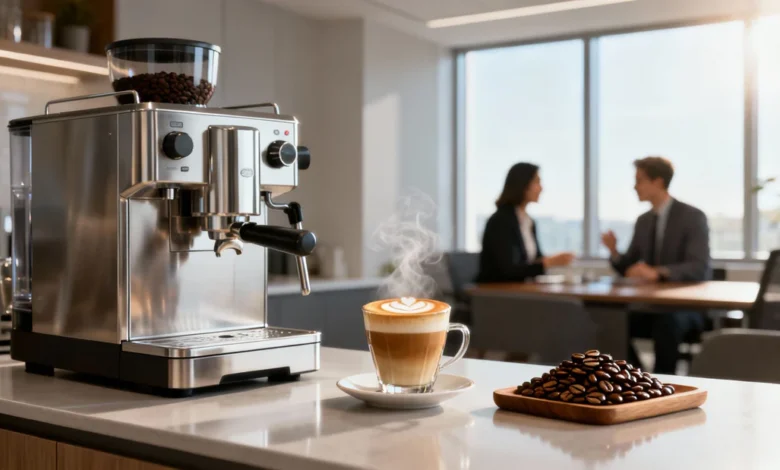
Choosing between instant and bean to cup for the office isn’t really about which machine is better on paper, it’s about matching the machine to how your team actually drinks coffee day to day. An instant machine gets a decent cup out fast with almost no maintenance, while a bean to cup unit grinds fresh beans per cup for a result closer to what you’d get from a barista, at the cost of more cleaning and a steeper price. Before deciding, it helps to look through the range of office coffee machines uk businesses actually install, because the gap between a basic instant unit and a proper bean to cup machine is bigger than a lot of buyers expect.
Instant coffee machines suit small offices or tight budgets where speed and simplicity matter more than taste. Bean to cup machines suit larger teams or workplaces where staff expect proper coffee shop quality, since beans are ground fresh for every cup. The right pick depends on headcount, how fussy your team is about coffee, and how much upkeep you’re willing to take on.
What’s the Actual Difference Between Instant and Bean to Cup?
An instant machine mixes hot water with soluble coffee granules or a pre-mixed concentrate, similar to making a jar coffee at home but automated. A bean to cup machine grinds whole beans fresh for every single drink, then brews and often froths milk automatically, producing a result much closer to a cafe espresso or flat white.
Instant wins on cost and simplicity. There’s very little to go wrong, cleaning takes minutes, and most staff can operate one without any training. Bean to cup wins on taste and variety, since fresh grinding changes the flavour completely, but the machines need regular descaling, bean top ups, and occasional servicing to keep running properly.
How Many People Are You Actually Making Coffee For?
Headcount matters more than most buyers assume when picking between the two. A team of five or six drinking the odd cup rarely justifies the cost and upkeep of a bean to cup machine, while an office of fifty or more will quickly notice if the coffee tastes like it came from a vending machine.
Quick Way to Check What Your Office Needs
- Count regular staff plus average daily visitor numbers.
- Ask around informally, some teams genuinely don’t mind instant.
- Note how many cups get made in your busiest hour.
- Factor in whether clients or visitors will also be served.
This is also where it helps to speak with a supplier who sells both types honestly rather than pushing whatever sits in their catalogue at the highest margin. A good supplier will ask about your headcount and usage pattern before recommending anything, rather than assuming bigger and pricier is automatically better for your office. Absolute Drinks takes this approach, stocking both instant and bean to cup ranges so the advice is based on what your team actually needs.
Who Should Choose an Instant Coffee Machine?
Instant machines suit small offices, satellite sites, and break rooms where coffee is more of a convenience than an experience. They’re also a sensible choice for businesses just starting out, where keeping running costs low matters more than impressing visitors with a flat white.
Instant is good enough for offices where staff aren’t particular about coffee quality, usage is low, and simplicity matters more than taste. It struggles once a team gets larger or more coffee-conscious, since the flavour gap versus fresh-ground coffee becomes obvious quickly.
When Bean to Cup Coffee Machines Are the Best Choice
Bean to cup machines suit larger offices, client-facing spaces, and any workplace where staff have come to expect decent coffee as part of the working day. Fresh grinding also means the machine can usually produce several drink types, such as espresso, americano, and flat white, from the same unit.
The catch is upkeep. Beans need topping up, milk systems need daily cleaning if fitted, and the machine needs periodic descaling to avoid a drop in taste or a breakdown. None of this is difficult, but it does need someone to own the task, which instant machines simply don’t require.
Business Coffee Machines UK: What to Check Before Buying
Anyone comparing business coffee machines UK suppliers offer should look past the drink menu on the box and check three things: how the machine copes with your daily volume, how much cleaning it genuinely needs, and whether a call-out engineer is available locally if something breaks. A machine that looks impressive in a showroom can still be the wrong fit if nobody in the office has time to maintain it.
Automatic Office Coffee Machines : How Much Do They Really Simplify Things?
Automatic office coffee machines UK businesses install typically handle grinding, dosing, brewing, and often milk frothing without any manual steps, which cuts training down to pressing a single button. That said, automatic doesn’t mean maintenance-free. Bean hoppers still need refilling and internal parts still need descaling, automation just removes the guesswork from making the drink itself.
Instant vs Bean to Cup: Side-by-Side Comparison
| Factor | Instant | Bean to Cup |
| Taste quality | Basic, similar to jar coffee | Closer to cafe standard |
| Maintenance | Minimal, quick clean | Regular descaling and cleaning |
| Drink variety | Limited, usually one or two options | High, multiple espresso-based drinks |
| Training needed | Almost none | Minimal, mostly bean and milk top ups |
| Best suited to | Small teams, low usage | Larger teams, client-facing offices |
Which Should You Choose? A Quick Decision Guide
- Small team, low coffee demand: choose instant.
- Larger team, staff care about quality: choose bean to cup.
- Client meetings and visitors regularly on site: choose bean to cup.
- Tight budget or no one to manage upkeep: choose instant.
- Mixed office with varied tastes: bean to cup, for the drink variety.
Frequently Asked Questions
1. What is the difference between instant and bean to cup office coffee machines?
Instant machines mix hot water with soluble coffee for a quick, low-maintenance drink, while bean to cup machines grind whole beans fresh for each cup, giving a stronger, more cafe-like result at the cost of more regular upkeep.
2. Are bean to cup machines worth it for a small office?
Usually not, unless the team is particularly keen on coffee quality. Small offices with light usage rarely justify the extra cleaning and running costs, so instant tends to be the more practical choice.
3. How often do bean to cup machines need cleaning?
Daily rinsing of the milk system if fitted, plus a full descale every one to three months depending on water hardness and how heavily the machine is used. Neglecting this affects both taste and reliability.
4. Do instant coffee machines taste noticeably worse than bean to cup?
Yes, there’s a clear flavour difference. Instant coffee lacks the depth and crema you get from fresh-ground beans, though many offices find it perfectly acceptable for everyday use rather than a treat.
5. How many staff justify a bean to cup machine over instant?
As a rough guide, offices above 20 to 30 people, or those with regular client visitors, tend to get more value from bean to cup, while smaller teams often don’t drink enough coffee to justify the extra upkeep.
6. Can bean to cup machines make more than one type of drink?
Most models can produce espresso, americano, and flat white style drinks from the same unit, sometimes more, since the grinding and brewing process is the same regardless of the final drink style.
7. Do automatic office coffee machines need any training to use?
Very little. Most automatic machines work on a single button press per drink, so training is usually limited to refilling beans, water, or milk rather than learning to operate the brewing process itself.
8. What’s cheaper to run day to day, instant or bean to cup?
Instant is cheaper per cup in most cases, since soluble coffee costs less than whole beans and there’s no milk system or descaling supplies to budget for, though the gap narrows for offices making a lot of milk-based drinks.
9. Is instant coffee suitable for client-facing offices?
It can work for casual settings, but offices that regularly host clients or visitors generally benefit from bean to cup, since the coffee quality reflects on the business in a way instant often doesn’t match.
Final Thought :
Neither option is universally better, it comes down to matching the machine to your office rather than picking whatever looks most impressive. Be honest about your headcount, how fussy your team genuinely is about coffee, and who’s going to handle the day to day upkeep before committing to either type.
If you’re still unsure which fits, it’s worth talking to a supplier who stocks both instant and bean to cup ranges and can advise based on how your office actually runs, rather than what’s easiest to sell. Absolute Drinks offers both types of office coffee machine and can help you weigh up what suits your workplace before you commit to anything.