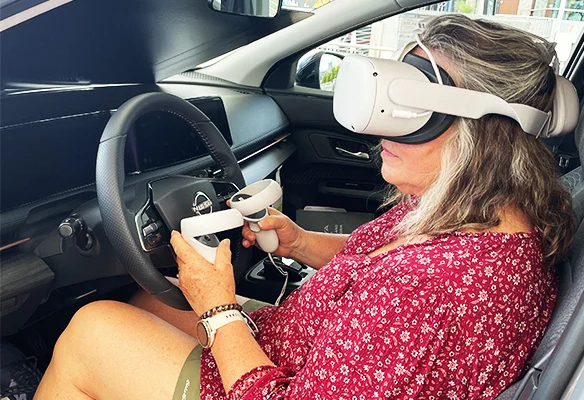
VR headsets turn a marketing activation into an experience people actually remember, letting brands put visitors inside a product demo, a branded environment, or a story rather than just showing it to them on a screen. They work especially well at trade shows, product launches, and pop-up activations where footfall is high and you need something that stops people walking past. Most brands don’t buy the hardware outright since campaigns are short and headset models move on fast, which is why renting for the specific dates of a campaign has become the standard approach.
Marketing teams planning their next activation increasingly turn to VR headset hire instead of purchasing headsets outright, and the reasoning is straightforward once you look at how campaigns actually run. A single activation might need twenty headsets for three days at one venue, then a completely different setup two months later for a different audience. Buying hardware that sits in storage between campaigns rarely makes sense when the same budget can rent exactly what’s needed, configured for that specific event, then handed back.
Why VR Works So Well for Activations
People forget banners. They remember the five minutes they spent standing inside a headset watching your product come to life around them. That’s the real advantage VR brings to a marketing activation, it turns a passive glance into an experience the visitor actively participates in, and participation is what gets shared, photographed, and talked about after the event ends.
Attention spans at trade shows and exhibitions are short. A visitor walking a busy hall gives most stands a few seconds before moving on. A headset changes that dynamic completely, since curiosity about what someone else is seeing tends to draw a small crowd, and the person wearing it is committed to at least a minute or two of full engagement with your brand.
What Counts as an Immersive Marketing Activation?
An immersive marketing activation is any campaign element built to physically involve the audience rather than simply present information to them. This includes VR product walkthroughs, 360 degree branded environments, interactive AR overlays, and mixed reality stations where digital content responds to a visitor’s movement or choices. The common thread is participation, the visitor does something rather than just watching or reading.
VR vs. Traditional Activation Formats
| Factor | VR Headset Activation | Traditional Stand or Screen |
| Engagement time | 2 to 5 minutes per visitor | A few seconds walking past |
| Memorability | High, tied to physical experience | Lower, easy to forget |
| Crowd pulling effect | Strong, draws onlookers | Minimal |
| Setup complexity | Moderate, needs staffing and space | Low |
| Content flexibility | High, swap experiences per campaign | Limited to static assets |
Where VR Headsets Get Used Most
Product launches lean on VR to let people experience a car interior, a property walkthrough, or a piece of machinery in action without the cost of shipping the real thing to every venue. Retail pop-ups use it for branded storytelling that turns a shop window into a destination. Recruitment and careers fairs increasingly use it too, giving candidates a first person look at a workplace or job role. A well-run supplier such as The Tekk Group will usually ask what kind of activation you’re running before recommending hardware, since a five minute product demo and an hour long training simulation need very different headset specifications and battery arrangements.
Trade shows sit somewhere in between, since footfall is constant and each session needs to be short enough to keep a queue moving while still delivering enough content to make an impression.
Matching the Experience to the Brand, Not Just the Hardware
A headset is only as good as the content running on it, and this is where a lot of first-time activations fall short. Teams sometimes rent the hardware, then treat content as an afterthought, bolting on a generic 360 video that has nothing to do with the actual product or message. The experiences that get remembered and photographed are built around a clear brand story, whether that’s stepping inside a car before it’s built, walking through a property that hasn’t finished construction, or seeing a piece of industrial equipment in action from an angle no visitor could safely get in real life.
It’s also worth thinking about how the experience ends. A strong VR activation gives the visitor something to do next, scan a code, speak to a team member, or collect a follow-up email, rather than letting them hand back the headset and walk away with nothing tying the moment back to your brand.
Choosing Hire Volume for Events vs. Exhibitions
VR headset hire for events tends to focus on quick turnaround experiences, five minutes or less, built to handle a steady stream of visitors across a full day without long queues forming. VR headset hire for exhibitions often runs closer to this same model but with more emphasis on repeat cycles across multiple days, since exhibitions frequently run for a week or longer rather than a single evening. Both formats depend on having enough headsets on hand to avoid a bottleneck, which is exactly why hire volume needs to match expected footfall rather than guesswork.
Planning Your Own VR Activation: A Step by Step Approach
- Define the goal first, brand awareness, lead capture, or product education all need different content lengths.
- Estimate footfall and calculate how many headsets you need to avoid long queues during peak hours.
- Brief your content team or hire a studio to build the experience around your specific hardware.
- Confirm staffing, someone needs to guide visitors, sanitise headsets between uses, and manage the queue.
- Test the full setup at your venue before doors open, including Wi-Fi and power requirements.
- Plan for short term VR headset hire rather than a long rental period if your activation only runs a few days.
Key Terms Worth Knowing
Standalone VR headset: a headset that runs its own processing and battery without needing a connected PC or console, making it far easier to deploy at events.
Tethered VR headset: a headset connected to a separate computer for higher graphical power, typically used for more demanding simulations.
Mixed reality: technology blending real world surroundings with digital elements, often used interchangeably with augmented reality in event marketing.
Practical Considerations Most Teams Overlook
- Hygiene between users matters, budget time and staff for cleaning headsets and face cushions
- Battery life on standalone headsets rarely covers a full day without spares or charging stations
- Motion sickness affects a small percentage of users, so shorter experiences reduce complaints
- Venue Wi-Fi can be unreliable, confirm whether your content needs a live connection or runs offline
- Space matters more than people expect, users need room to turn and sometimes step in any direction
Frequently Asked Questions
1. How many VR headsets do I need for a trade show stand?
Most stands run comfortably with four to six headsets for a single day event, scaling up for larger footfall or multi-day exhibitions.
2. Does VR headset hire include the content or experience itself?
Sometimes, but not always. Many suppliers hire hardware only, so confirm early whether you need a separate studio to build your branded experience.
3. What happens if a headset breaks during an event?
Reputable hire companies include spares or a rapid replacement service as part of the package, so always ask about this before booking.
4. Is VR suitable for outdoor activations?
Yes, with the right headset model and shading for screens, though bright direct sunlight can affect visibility on some devices.
5. How long should a single VR experience last at an event?
Between two and five minutes works best for high footfall events, keeping queues moving while still delivering a memorable experience.
6. Can VR headsets be used for recruitment or career events?
Yes, VR is increasingly used to give candidates an immersive preview of a workplace, role, or training environment before they apply.
7. Do I need Wi-Fi on site for a VR activation?
Not always. Many standalone headsets run content locally, so connectivity depends on whether your experience needs live data or streaming.
8. the difference between hiring VR headsets and buying them?
Hiring avoids the cost of hardware sitting unused between campaigns and gives access to newer models without a long term commitment.
Final Thoughts
VR headsets have moved from novelty to a genuinely useful tool for any brand trying to stand out at a crowded event. What makes an activation work isn’t just the technology, it’s matching the right headset, content length, and staffing plan to your specific audience and venue.
The Tekk Group has supported marketing teams running everything from single day product launches to week long exhibition stands, and knows how to match hardware to the kind of experience you’re trying to create. Getting the planning right before the event, footfall, content, staffing, and hardware, makes the difference between an activation people talk about and one they simply walk past.