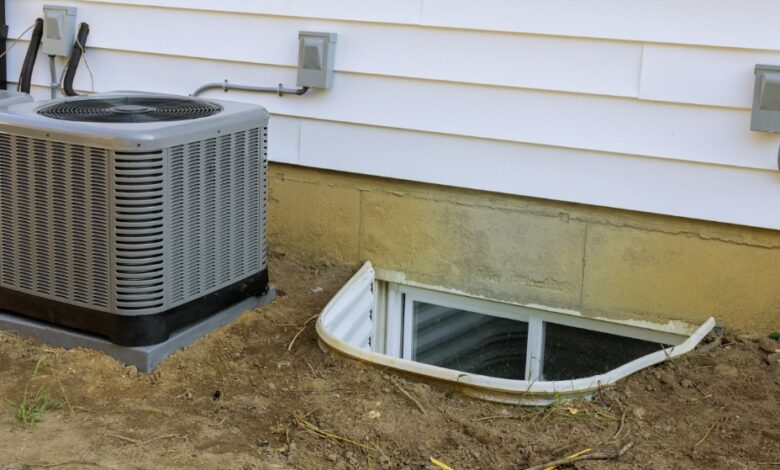
TLDR: A window well is a curved retaining structure installed against a foundation wall to allow a below-grade window to receive light and provide egress. They are required by code for any basement sleeping room with a window that sits below grade. Installation costs $400 to $2,500 per well, including excavation and the well unit. Skipping them on egress windows is a code violation in most jurisdictions.
A window well is a corrugated steel, plastic, or stone retaining structure that holds back soil around a below-grade window, creating an open space in front of the window that allows light in and allows a person to exit in an emergency. Without a window well, a basement window below grade would be buried against soil with no light, no ventilation, and no egress capability.
Window well projects are commonly associated with basement finishing, egress window installation, deteriorating window wells, and drainage failures. Homeowners searching for window well contractors near me are often looking for installation, replacement, or remediation services that improve safety and water management around below-grade windows.
When Does Building Code Require a Window Well?
The International Residential Code (IRC Section R310) requires an egress window in every basement sleeping room. If that window’s sill is below grade, a window well is required. The well must provide minimum interior dimensions of 36 inches wide by 36 inches deep to allow egress clearance.
A basement bedroom without a code-compliant egress window and well is a code violation. It also creates a documented liability if a fire occurs and occupants cannot exit. Most home inspectors flag this during a sale inspection, and it typically becomes a repair condition in the purchase agreement.
What Are the Types of Window Wells?
Galvanized Corrugated Steel
The most common material. Available in standard sizes from most building supply stores. Lasts 15 to 30 years before corrosion becomes a structural concern. The corrugation provides flexibility during frost heave.
Cost: $30 to $150 for the unit. Installation labor is separate.
Polyethylene Plastic
Lighter than steel. Does not corrode. More flexible during ground movement. Similar lifespan to galvanized steel in most climates.
Cost: $50 to $250 for the unit.
Stone or Masonry
Custom-built wells using concrete block, natural stone, or brick. More durable than metal or plastic. Better aesthetics for visible exterior applications. Requires a mason rather than a general contractor.
Cost: $500 to $2,000 for materials alone.
How Much Does Window Well Installation Cost?
| Scope | Cost Range |
| Standard steel well unit (materials only) | $30 to $150 |
| Excavation (hand dig, average depth) | $100 to $300 |
| Well installation (labor) | $200 to $400 |
| Drainage gravel at base | $50 to $150 |
| Egress window (if needed) | $300 to $700 |
| Total (standard installation) | $400 to $1,200 |
| Total (with new egress window) | $700 to $2,500 |
Rock soil or high water table conditions increase excavation cost. Boulder County and other Front Range areas with clay-heavy soil may require specialized drainage at the well base to prevent accumulation.
What Drainage Does a Window Well Need?
A window well without drainage accumulates water during rain events. Water that sits in the well puts hydrostatic pressure on the window and eventually seeps around the frame.
Minimum drainage: 6 to 12 inches of drain rock (washed gravel, 3/4 inch) at the base of the well. This allows water to percolate away from the window.
Better drainage: a perforated drain pipe at the base of the well connected to the foundation drainage system or daylighted to grade. This actively moves water away rather than relying on soil percolation.
For wells in high-water-table areas or clay soils that percolate slowly, the perforated drain connection is not optional. It is what keeps the well functional.
Does a Window Well Need a Permit?
In most Colorado municipalities, adding or replacing a window well does not require a permit on its own. However, adding an egress window as part of a basement bedroom finish does require a permit, and the permit inspection will verify that well dimensions meet IRC minimums.
Replacing a deteriorated existing well typically does not trigger a permit requirement unless the window or foundation opening is modified. Check with your local building department before starting work if the project involves any opening modification.
How Do You Know a Window Well Needs Replacement?
Existing well replacement indicators:
- Rust perforation in steel wells (water bypasses the well wall entirely)
- Cracking or fragmentation in plastic wells from UV exposure and freeze-thaw cycles
- Well has settled below the foundation wall flange, creating a gap that allows soil infiltration
- Interior dimensions no longer meet code minimums due to soil buildup or deformation
A well that has settled or deformed cannot be repaired. Replacement is the correct action.
Key Takeaways
- Window wells are required by IRC for any below-grade window in a basement sleeping room; the well must be a minimum 36×36 inches interior clear dimension
- Standard installation costs $400 to $1,200 per well; projects including a new egress window run $700 to $2,500
- At minimum, 6 to 12 inches of drain rock at the well base is required; clay soil conditions need an active perforated drain connection
- Steel wells last 15 to 30 years before corrosion becomes structural; inspection for perforation is the primary replacement trigger
- A basement bedroom without a compliant egress window and well is a code violation that surfaces during home inspections and creates liability
- Replacing a deteriorated well does not typically require a permit, but adding an egress window in a new bedroom finish always does
Window wells are not a cosmetic feature. They are a code requirement for habitable below-grade space and a life-safety component when the window below is an egress. Getting the installation right, including drainage, protects both the basement and the occupants.