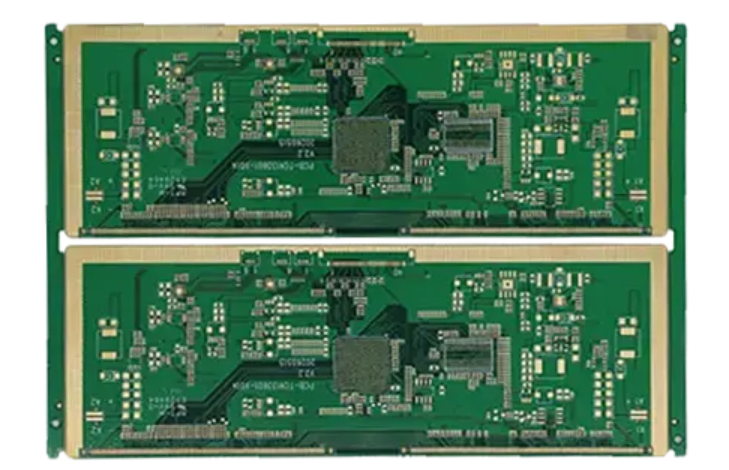
In the rapidly advancing world of telecommunications, aerospace, and high-speed computing, where signal integrity and data transmission rates are paramount, the flexible pcb manufacture industry faces increasingly complex engineering challenges that demand innovative solutions and specialized expertise. The production of flexible circuits for high-frequency applications, where signals travel at gigahertz speeds and signal integrity must be maintained across flexible interconnects, requires a fundamentally different approach than standard flexible circuit production. The flexible pcb manufacture process for high-frequency applications must address critical issues including impedance control, dielectric loss, and signal reflection, all while maintaining the mechanical flexibility that makes flexible circuits desirable in the first place. The industry that produces these specialized boards has developed advanced capabilities in controlled impedance design, material selection, and precision processing to meet the exacting requirements of high-frequency electronic systems. The global demand for high-frequency flexible circuits continues to grow substantially, driven by the rollout of 5G networks, the increasing sophistication of radar systems, and the proliferation of high-speed data links in automotive and consumer electronics. Understanding the unique engineering challenges, material considerations, and design requirements of high-frequency flexible circuits is essential for RF engineers, product developers, and manufacturing specialists who recognize that signal integrity is fundamental to the performance of modern electronic systems.
The Material Selection for High-Frequency Performance
The flexible pcb manufacture process for high-frequency applications begins with the careful selection of materials that provide the electrical and mechanical properties required for GHz-speed signal transmission. The dielectric constant of the substrate material must be carefully controlled, because variations in dielectric constant can affect impedance and signal propagation characteristics, and materials with stable dielectric constants across frequency and temperature are essential for reliable high-frequency performance. The loss tangent of the substrate, which measures the energy dissipated as heat during signal transmission, must be minimized to reduce signal attenuation and ensure that high-frequency signals reach their destination with adequate amplitude. The liquid crystal polymer substrates offer exceptional high-frequency performance, with low dielectric constant, low loss tangent, and excellent dimensional stability, making them the material of choice for demanding high-frequency applications. The fluoropolymer substrates, including PTFE-based materials, provide the lowest loss tangent available, but they present significant processing challenges due to their chemical resistance and dimensional instability. The advanced polyimide formulations with modified dielectric properties offer a balance between high-frequency performance and processability, making them suitable for many high-frequency applications. The flexible pcb manufacture industry has developed specialized expertise in handling these advanced materials, enabling the production of high-frequency circuits with consistent, predictable electrical performance.
The Controlled Impedance Design and Manufacturing
The controlled impedance design and manufacturing is one of the most critical aspects of flexible pcb manufacture for high-frequency applications, because impedance mismatches can cause signal reflections, power loss, and data errors that compromise system performance. The characteristic impedance of the transmission line, typically 50 ohms or 100 ohms for differential pairs, must be precisely controlled through careful design and manufacturing, and the target impedance is determined by the specific requirements of the application. The trace geometry, including trace width, trace spacing, and the spacing between the trace and the reference plane, determines the characteristic impedance of the transmission line, and these dimensions must be maintained with tight tolerances during manufacturing. The dielectric thickness, which is the distance between the signal trace and the reference plane, is another critical factor in impedance control, because variations in dielectric thickness can significantly affect the characteristic impedance. The flexible pcb manufacture process must achieve consistent material thickness, trace dimensions, and dielectric spacing to achieve the required impedance control, and any variations can result in impedance mismatches that compromise signal integrity. The impedance testing, which measures the actual impedance of manufactured circuits, verifies that the boards meet the impedance specifications and provides feedback for process improvement. The controlled impedance design and manufacturing capabilities of flexible pcb manufacture are essential to achieving the signal integrity required for high-frequency applications, and manufacturers who excel in this area can provide significant value to their customers.
The Signal Integrity Management and Testing
The signal integrity management and testing of high-frequency flexible circuits is essential to verifying that the boards will perform as designed in their intended applications, and the flexible pcb manufacture process must be validated through comprehensive signal integrity testing programs. The time-domain reflectometry testing measures impedance variations along the transmission line, detecting discontinuities and impedance mismatches that could cause signal reflections and degrade performance. The vector network analyzer testing measures the scattering parameters of the circuit, providing comprehensive characterization of signal transmission and reflection characteristics across the frequency range of interest. The insertion loss measurement, which quantifies the signal attenuation through the circuit, verifies that the circuit provides adequate signal transmission for the application, and the return loss measurement, which quantifies the signal reflection, verifies that the circuit provides good impedance matching. The crosstalk measurement, which quantifies the unwanted coupling between adjacent signal traces, verifies that signal integrity is maintained even with multiple signals transmitted simultaneously. The eye diagram analysis, which visualizes signal quality in digital systems, provides a comprehensive assessment of signal quality and identifies issues such as jitter, noise, and intersymbol interference. The signal integrity testing capabilities of flexible pcb manufacture are essential to delivering high-frequency circuits that meet the demanding performance requirements of modern electronic systems, and manufacturers who invest in comprehensive testing can provide their customers with confidence in product performance.
The Future of High-Frequency Flexible Circuits
The flexible pcb manufacture industry is poised for continued innovation in high-frequency circuit production, driven by advances in materials, manufacturing technology, and design methodology that promise to enhance performance and expand applications. The development of new dielectric materials with improved high-frequency characteristics is enabling the production of circuits with lower loss and higher data transmission rates, supporting the ever-increasing bandwidth requirements of modern electronic systems. The advancement of manufacturing technologies, including laser direct imaging and precision plating, is enabling finer features and tighter tolerances, improving impedance control and signal integrity in high-frequency circuits. The integration of simulation and design optimization tools is enabling more efficient design and validation, with engineers able to model and optimize high-frequency circuits before manufacturing, reducing development time and cost. The application of machine learning and artificial intelligence to high-frequency circuit design and manufacturing is enabling the optimization of complex designs and the identification of process improvements, supporting continuous improvement in quality and performance. The development of millimeter-wave and terahertz applications is pushing the boundaries of flexible circuit performance, requiring new materials, designs, and manufacturing techniques to achieve the required signal integrity and reliability. The future of high-frequency flexible circuits is one of continuous innovation, driven by the needs of telecommunications, aerospace, and computing systems for ever-higher data rates and ever-improving signal integrity.